
Introduction
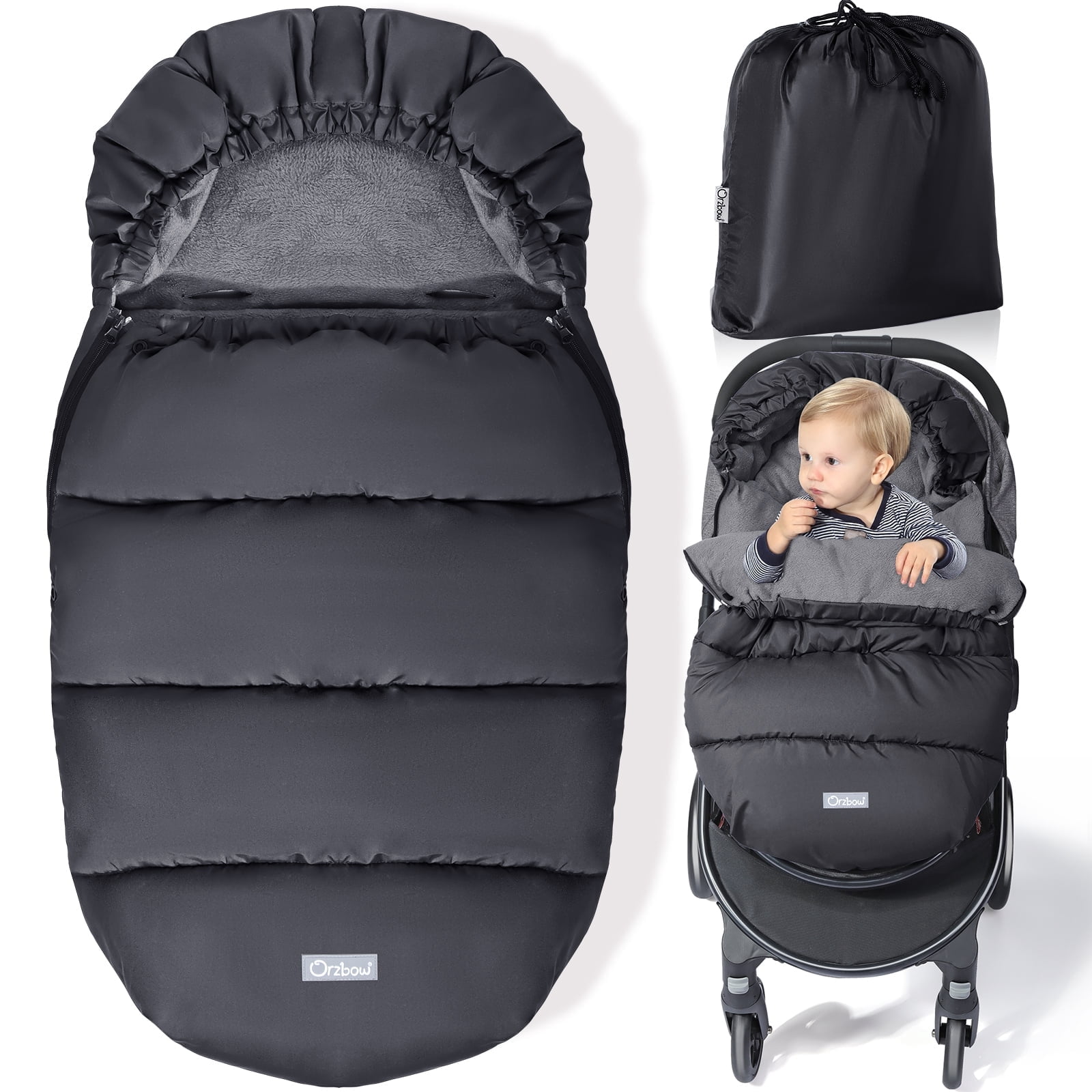
A footmuff for a stroller is a padded, zippered cover that keeps a child’s legs and lower body warm while they ride in a stroller. It attaches to the stroller seat and usually has openings for the safety harness.
In the United States, parents often use footmuffs during cold walks, winter errands, and outdoor trips. A footmuff is not the same as a loose blanket. It stays in place, helps block cold air, and lets the stroller harness remain accessible when used correctly.
The right footmuff can make winter stroller rides more comfortable. However, it must fit the stroller, work with the harness, and allow the child to stay safely secured.

How Does a Stroller Footmuff Work?
A footmuff works like a small sleeping bag made for a stroller seat. The child sits inside the lower section, while a zippered cover wraps around the legs, feet, and sometimes the torso.


Most footmuffs have these parts:
- Back panel: Rests against the stroller seat.
- Foot pocket: Holds the child’s legs and feet.
- Front cover: Zips open or closed over the child.
- Harness slots: Let the shoulder, waist, and crotch straps pass through.
- Attachment points: Help keep the footmuff from sliding down.
- Adjustable hood or collar: Found on some models.
The footmuff does not heat the child by itself. It helps hold warm air close to the body and reduces exposure to wind. The child’s clothing still provides much of the insulation.
A footmuff is different from a stroller rain cover. A rain cover helps block rain and wind from the stroller canopy area, while a footmuff mainly warms the child’s lower body. Some parents use both, but each product must be approved for the stroller and used as its instructions explain.
Footmuff vs. stroller blanket
A blanket can move, fall off, or become trapped near the wheels. A footmuff attaches to the stroller and has planned openings for the harness. This can make it easier to keep the child covered while walking.
A footmuff is not automatically safer than a blanket, though. Safety depends on correct fit, proper harness use, and following the product and stroller manuals.
What Are the Main Types of Footmuffs?
Footmuffs come in several designs. The best type depends on your climate, stroller, and how long your child will use it.
Standard winter footmuff
A standard winter footmuff has a padded lower section and a warm zippered cover. It is often designed for cold weather and may include fleece, synthetic insulation, or a water-resistant outer fabric.
This type works well for families who take regular winter walks. It may be too warm for mild fall or spring weather unless the front cover opens fully.
Convertible footmuff
A convertible footmuff can change into a lighter seat liner or stroller pad. Parents may remove the top cover as the weather warms.
This design can offer more use across the year. Check how the remaining liner affects the harness fit and whether the stroller maker allows the accessory.
Lightweight or transitional footmuff
A lighter footmuff uses less insulation. It may suit cool mornings, windy days, and mild winters.


It is often more useful in areas with changing temperatures. It may not provide enough warmth for extended outdoor use in very cold conditions.
Universal footmuff
A universal footmuff is made to fit many stroller brands. “Universal” does not mean it fits every stroller safely or perfectly.
Before buying one, compare:
- Harness slot positions
- Seat shape and recline
- Stroller width
- Attachment straps
- Canopy clearance
- Manufacturer limits
A model-specific footmuff may provide a cleaner fit, but it can cost more and may work for only one stroller line.

What Are the Benefits of Using a Footmuff?
The main benefit is simple: a footmuff helps keep a child warm without relying on a loose cover that can slide away.
Other possible benefits include:
- More stable coverage: The cover stays attached to the stroller.
- Better wind protection: A closed foot section can reduce drafts.
- Easy temperature changes: Many covers unzip or fold down.
- Less kicking off: The child cannot easily push the cover onto the ground.
- Cleaner stroller use: The footmuff can protect the seat from dirt and light moisture.
- Comfort during recline: Some children stay warmer when the stroller seat is partially reclined.
A footmuff can also simplify winter routines. Instead of adjusting a blanket every few minutes, a parent can open or close the cover as the temperature changes.
Still, warmth is not always better. A child can become too hot, especially inside a sheltered stroller with a closed canopy. Check the child’s chest or back for warmth rather than relying only on cold hands.

How Do You Use a Footmuff Safely?
Use a footmuff only when the stroller manual and footmuff instructions allow it. Then install it so the harness passes through the intended slots and lies snugly against the child.
Follow these steps:
- Read both manuals. Check the stroller maker’s rules for accessories and recline positions.
- Place the footmuff flat. Keep the back panel from bunching behind the child.
- Match the harness openings. Use the slots that place the straps correctly for the child’s height.
- Thread the harness through the slots. Do not leave the straps outside the footmuff if the design requires them to pass through.
- Seat the child fully back. The child’s hips should rest at the back of the seat.
- Fasten the harness. Use every part of the stroller’s restraint system.
- Tighten the straps. The harness should be snug without pressing painfully.
- Zip the cover around the child. Keep the face and airway clear.
- Check movement and heat. Make sure the child can breathe freely and is not sweating or flushed.
- Recheck after movement. The footmuff may shift when the child kicks or when the stroller reclines.
The child should remain secured in the stroller harness even when inside the footmuff. A warm cover does not replace the restraint system.
Important harness rule
Avoid bulky coats or thick layers under the harness. The American Academy of Pediatrics explains that bulky clothing can create extra space between the child and the harness. In a sudden stop, that space may allow the child to move too far forward.
Use thin, warm layers under the straps when possible. Add the footmuff over the harness area if the product is designed for that use. You can also place a blanket over properly tightened straps, but do not let loose fabric cover the child’s face or gather near the wheels.

How Do You Choose the Right Footmuff?
Choose a footmuff by fit and use, not by appearance alone. The most important question is whether the product works with your exact stroller and harness.
Check stroller compatibility
Look for the stroller’s brand, model, and year. A footmuff may fit one stroller seat but interfere with another seat from the same brand.


Check for:
- Correct harness slot alignment
- Safe use with a five-point harness
- Compatibility with a bassinet or carrycot, if relevant
- Clearance around the buckle
- Access to the recline lever
- Space for the child’s shoulders
- Proper attachment around the seat
If the footmuff blocks the buckle, prevents a snug harness, or changes the seat’s position, do not use it.
Match the climate
Consider the coldest conditions in which you plan to use it. A thick winter footmuff may be useful in northern states, but it may cause overheating during mild weather in parts of the South or West.
Look for a design with:
- A removable top
- A two-way zipper
- Ventilation or adjustable opening
- Water-resistant outer fabric
- Washable materials
- A warm but breathable lining
No footmuff can replace weather judgment. On very cold, icy, or dangerous days, staying indoors may be the safer choice.
Consider the child’s age and size
A footmuff should give the child room to sit naturally without allowing the body to slide down. The child’s shoulders should remain near the correct harness height.
Check the stated age, height, and weight limits. These limits vary by product and should not be guessed from the footmuff’s overall size.
Think about cleaning
Winter accessories collect food, mud, and moisture. A removable cover or machine-washable fabric can make daily use easier.
Follow the care label. Do not use heat or cleaning products that could damage the insulation, waterproof coating, snaps, or harness openings.

What Is the Difference Between a Footmuff and a Bunting Bag?
A stroller footmuff and a bunting bag serve a similar purpose, but the terms are not always used in the same way.
A footmuff is usually shaped for a stroller. It often has a back panel, harness slots, and a foot pocket.
A bunting bag is a broader term for an insulated cover that surrounds the child’s body. Some bunting bags are made for car seats, carriers, or outdoor use rather than strollers.
Do not assume that a car-seat bunting bag can be used in a stroller, or that a stroller footmuff can be used in a car seat. Car seats have strict harness and crash-safety requirements. Products that add padding or place material between the child and the car-seat harness may be unsafe.
Use only products approved for the specific setting. A stroller accessory is not a car-seat accessory unless the car-seat maker clearly says so.

Can a Baby Sleep in a Stroller Footmuff?
A footmuff does not turn a stroller into a safe sleep space. Follow the stroller manual and current guidance from the American Academy of Pediatrics about infant sleep.


The AAP recommends that babies sleep on a firm, flat surface intended for sleep, such as an approved crib, bassinet, or play yard. Routine sleep in a stroller is not a substitute for that arrangement.
If a baby falls asleep during a walk, monitor the child and move the baby to an appropriate sleep surface when practical. Never cover the stroller opening in a way that restricts airflow, and keep the child’s face uncovered.
A stroller footmuff may be suitable for warmth during supervised travel. It should not be treated as a sleep product unless the manufacturer has specifically designed and approved the complete stroller setup for that use.

Common Footmuff Mistakes to Avoid
Small setup mistakes can reduce comfort or create a safety problem. Avoid these common errors:
- Using a footmuff that does not fit the harness: The straps must pass through the correct openings.
- Leaving the harness loose: Warm clothing does not justify a loose restraint.
- Putting thick padding behind the child: Extra material can affect harness fit.
- Covering the child’s face: Keep the nose and mouth fully clear.
- Closing the canopy and footmuff on a warm day: Check for overheating.
- Using a footmuff in a car seat: Use only car-seat-approved products in a vehicle.
- Blocking the stroller buckle: The buckle must remain easy to release.
- Allowing fabric near the wheels: Secure loose straps and material.
- Ignoring the stroller’s weight or recline limits: The accessory does not change those limits.
- Using a damaged product: Replace one with torn fabric, broken fasteners, or damaged harness openings.
Stop using the footmuff if the child appears hot, sweaty, pale, unusually sleepy, or distressed. Move to a safe, comfortable place and adjust the layers.

Footmuff Decision Guide
Use this quick guide to narrow your choice:
| Your situation | Practical choice |
|---|---|
| Cold winter walks | Insulated winter footmuff |
| Mild fall or spring weather | Lightweight or convertible footmuff |
| Frequent temperature changes | Removable-cover design |
| More than one stroller | Carefully checked universal model |
| One main stroller | Model-specific accessory may fit better |
| Frequent spills or mud | Washable, removable cover |
| Car travel | Do not use a stroller footmuff unless the car-seat maker approves it |
| Infant sleep concerns | Use a proper sleep surface, not a footmuff |
The best option is the one that keeps the child comfortable while preserving a correct harness fit. A more insulated product is not automatically the better choice.

Frequently Asked Questions
Do footmuffs fit all strollers?
No. Some footmuffs are made for a particular stroller, while others are marketed as universal. Always check harness openings, seat width, recline function, and attachment points before use.
What should a baby wear under a footmuff?
Use comfortable layers suited to the weather. Avoid thick coats under a tight harness. Thin layers, socks, and a hat may be more practical, but check the child often for signs of overheating or cold.
Can you use a footmuff with a newborn?
It depends on the footmuff and stroller. The stroller must be approved for a newborn, and the child must fit securely in the manufacturer-approved configuration. A footmuff alone does not provide newborn support.
Are stroller footmuffs waterproof?
Some have water-resistant outer fabric, but many are not fully waterproof. Read the product label and use a separate stroller rain cover only when the stroller maker permits it.
When should you stop using a footmuff?
Stop when the child outgrows the stated size limits, when the harness no longer fits correctly, or when the weather makes it too warm. A damaged or poorly fitting footmuff should also be replaced.
Key Takeaways
- A stroller footmuff is a warm, attached cover for a child’s lower body.
- It is designed for stroller use, not automatically for car seats or sleep.
- Check compatibility with the exact stroller and harness.
- Keep the five-point harness snug and correctly threaded.
- Avoid bulky clothing and extra padding under the harness.
- Keep the child’s face clear and check for overheating.
- Choose insulation based on your local weather and daily routine.
Conclusion
A footmuff for a stroller is a practical cold-weather accessory that acts like a fitted sleeping bag for the child’s legs and lower body. It can be more convenient than a loose blanket, especially on windy or chilly walks.


Before using one, confirm that it fits the stroller, allows correct harness use, and suits the weather. Keep the child secured, avoid bulky layers under the harness, and treat the footmuff as a comfort accessory—not as a car-seat product or a safe sleep space.
For U.S. safety guidance, review the American Academy of Pediatrics winter clothing advice, the CPSC stroller safety information, and your stroller and footmuff manufacturer’s current instructions.
