
A jogging stroller may shake because of a loose or misaligned front wheel, low tire pressure, worn bearings, an unlocked swivel wheel, or a damaged frame. It may also shake when the stroller moves over rough ground or when weight is placed unevenly.
In the United States, a jogging stroller should be stable before you use it with a child. Stop running if the shake is strong, sudden, or getting worse. First check the wheels, tires, axle, frame, and safety locks. Your stroller’s owner’s manual always takes priority because designs differ by brand and model.

The most common reasons a jogging stroller shakes
The cause often depends on when the shaking starts. A stroller that shakes only at high speed may have a different problem from one that wobbles while standing still.


| Symptom | Likely cause |
|---|---|
| Front wheel moves side to side | Loose axle, bearing, fork, or wheel mount |
| Handlebar shakes at faster speeds | Front-wheel alignment, low tire pressure, or wheel runout |
| Stroller pulls to one side | Unequal tire pressure, misalignment, or uneven load |
| Shaking starts after a flat tire | Tire bead, tube, rim, or wheel damage |
| Whole frame rocks on flat ground | Loose fastener, worn joint, or frame damage |
| Shake occurs only on gravel or cracks | Normal vibration from the surface, made worse by low pressure or loose parts |
| Wheel turns freely but will not track straight | Swivel mechanism not locked or front wheel not aligned |
A small amount of vibration is normal on sidewalks, gravel paths, and packed dirt. A repeated wobble on smooth pavement is not something to ignore.
Front-wheel problems
The front wheel has a major effect on tracking. If the axle is loose or the wheel sits at an angle, the wheel can swing from side to side. At a walking pace, this may feel minor. At a jogging pace, it can become a strong wobble.
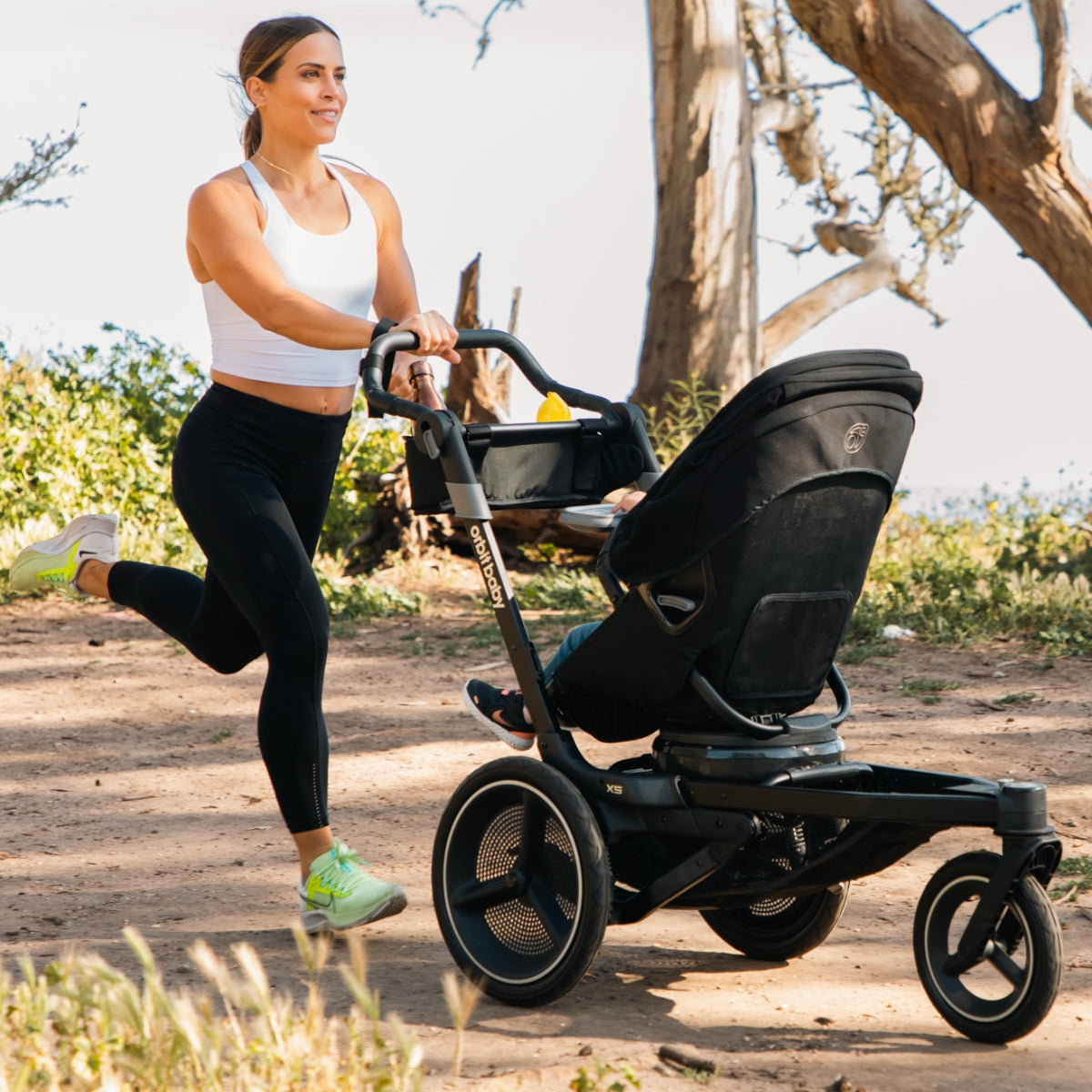
Some jogging strollers have a fixed front wheel for running. Others have a swivel wheel that can lock in a straight position. If the wheel is partly engaged, the stroller may wander or shake.
Tire and pressure problems
Pneumatic tires need the correct air pressure. A soft tire can deform as it rolls. This can create a side-to-side motion that feels like a shake in the handlebar.
Do not guess the pressure. Check the number printed on the tire sidewall and the pressure listed in the stroller manual. Use the lower limit only when the manual allows it. Too much air can reduce grip and make the ride harsh, while too little air can damage the tire or rim.
Loose hardware or worn parts
A loose axle nut, quick-release lever, wheel bolt, or frame fastener can cause play. “Play” means a part moves when it should remain firm.
Bearings can also wear out. A worn bearing may produce grinding, clicking, or a rough feel when you spin the wheel by hand. A wheel that is bent or no longer round can shake even when the axle is tight.
How to find the source of the shake
find the source before tightening random parts. A short inspection can tell you whether the issue is simple maintenance or a reason to stop using the stroller.
1. Remove your child and empty the stroller
Place the stroller on a flat surface. Remove the child, bags, toys, and other items. Lock the parking brake.
Never inspect a stroller while a child is seated in it. A wheel can move suddenly, and a loose part may fail during the check.


2. Test the stroller while it is parked
Hold the handlebar and gently rock the stroller forward, backward, and side to side. Watch the frame, front fork, rear axle, and wheels.
A small amount of flex in the fabric or handlebar may be normal. A clicking sound, visible joint movement, or shifting wheel mount is not normal.
3. Check each wheel for side-to-side movement
Hold one wheel at its sides and try to move it left and right. Do not use excessive force.
The wheel should not have obvious looseness. If the wheel shifts at the axle, check the owner’s manual for the correct tightening method. Some wheels use a quick-release system, while others use a bolt or axle nut.
4. Spin each wheel
Lift the wheel clear of the ground and spin it by hand. Look at the gap between the tire and fork or frame.
Watch for:
- A tire that moves in a side-to-side wave
- A rim that is not round
- A tire bead that is not seated evenly
- Scraping against the frame
- Grinding or clicking from the hub
- A wheel that stops very quickly
A slight visual movement can come from tire shape. A strong wobble in the rim or hub needs repair or replacement.
5. Check tire pressure and condition
Use a bicycle or hand pump with a pressure gauge. Compare the reading with the stroller manual and tire sidewall.
Inspect for:
- Cuts or bulges
- Exposed threads
- Cracks from age
- A flat spot
- A loose valve stem
- Uneven wear
- A tube that repeatedly loses air
Replace a damaged tire or tube before running. Do not use a tire with a bulge or exposed casing.
6. Check the front-wheel lock and alignment
If your stroller has a swiveling front wheel, engage the running lock according to the manual. Push the stroller slowly and confirm that the wheel stays straight.
Do not assume that a locked wheel is aligned. Some designs let you adjust tracking with an alignment knob or axle position. Make only the adjustment described by the manufacturer.
7. Inspect the frame and folding joints
Look for bent tubes, cracks, dents, loose rivets, and damaged folding joints. Check the area where the handlebar joins the frame.
Do not straighten a bent frame yourself. Bending metal or plastic back into place can weaken it. Contact the manufacturer or a qualified repair service instead.

Safe fixes you can try at home
You can usually handle basic cleaning, tire inflation, and a manufacturer-approved wheel adjustment. More serious repairs need the correct part and procedure.


Inflate the tires correctly
Inflate all tires to the pressure specified for your model. Check them when they are cool and before a run.
Tire pressure may change with temperature. A tire that feels firm indoors can lose pressure in cold outdoor conditions. Recheck pressure if the stroller has been stored for a long time.
Reseat and secure the wheels
Remove and reinstall a removable wheel only as the manual directs. Make sure the axle is fully inserted and the quick-release lever is in its locked position.
A quick-release lever should not sit halfway between open and closed. If you are unsure whether it is secure, do not run with the stroller.
Clean the wheel and axle
Sand, mud, and small stones can interfere with a wheel mount. Remove the wheel if the manual permits it. Wipe the axle and mounting area with a clean cloth.
Do not spray oil or lubricant into a sealed bearing unless the manufacturer calls for it. Some lubricants attract grit or damage plastic parts.
Tighten approved fasteners
Use the tool and method listed in the manual. Tighten only parts that are designed to be adjusted.
Do not add washers, substitute bolts, or force a fastener past its normal stop. A bolt that is too tight can damage the part or prevent a wheel from turning freely.
Replace worn parts with compatible parts
Use parts made for the exact stroller model when available. A wheel that fits the axle may still have the wrong diameter, tread, bearing, or brake design.
Generic parts can change steering and stability. If the manufacturer no longer supplies the part, ask a qualified repair shop whether a safe replacement exists.

When a shaking jogging stroller is unsafe
Do not run with the stroller if the shake remains after basic checks. Walking slowly to a safe place may also be unwise if a wheel is loose or the frame is damaged.
Stop use and seek service when you see:
- A cracked, bent, or separated frame part
- A wheel that can come off or shift visibly
- A damaged axle, fork, or quick-release system
- A tire bulge, split, or exposed casing
- Grinding or binding in a wheel
- A front wheel that will not lock for running
- A brake that does not hold the empty stroller
- A shake that appeared after a crash or curb impact
- A repeated shake after tightening and inflation
- Missing hardware or a part that does not match the manual
A stroller can look fine while carrying a hidden structural problem. Do not rely on tape, glue, zip ties, or improvised hardware for a load-bearing repair.
Check the U.S. Consumer Product Safety Commission’s recall database for your stroller model at CPSC.gov/Recalls. Also check the brand’s support page for model-specific notices and replacement parts.


Why jogging speed makes a small problem feel worse
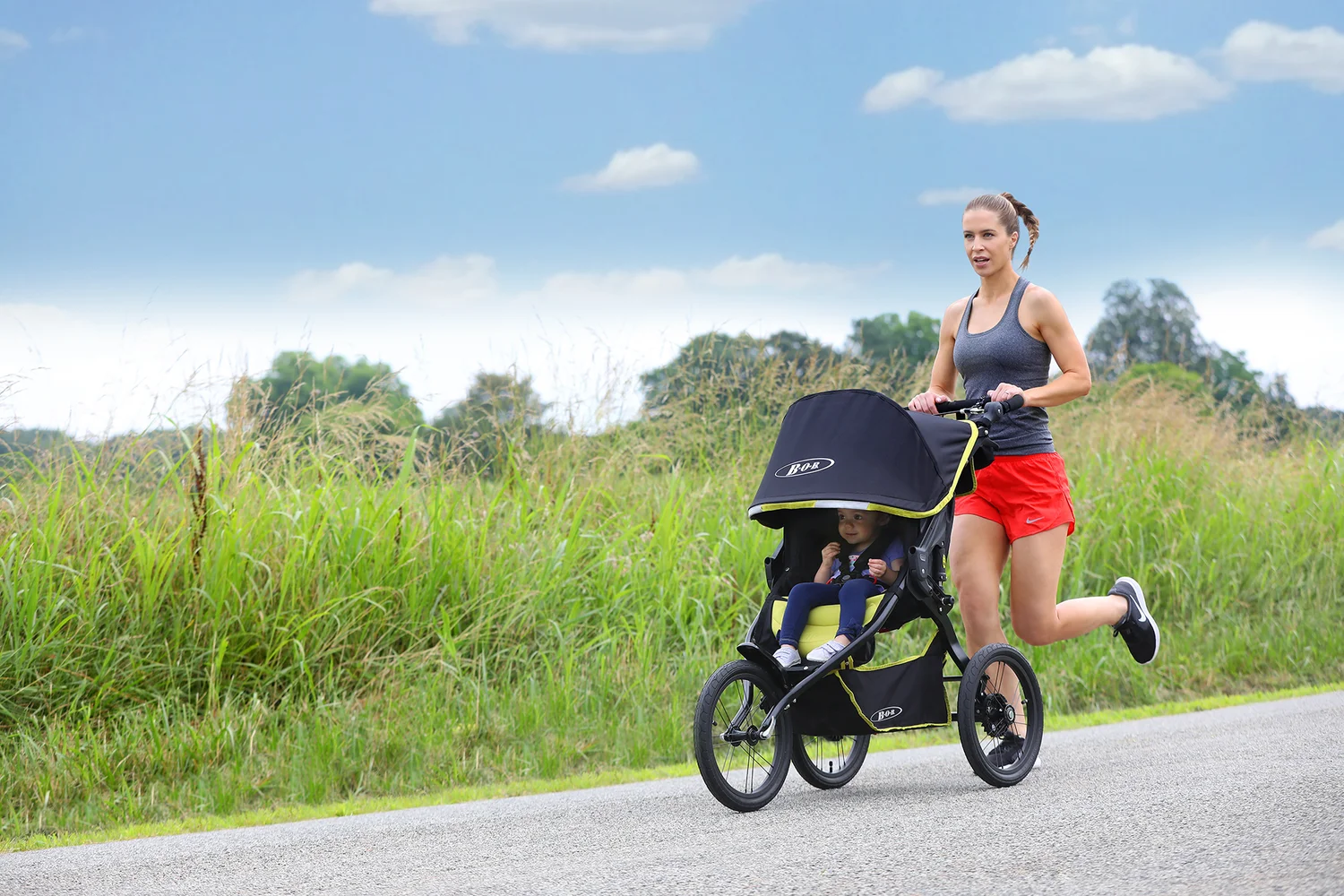
A jogging stroller’s front wheel acts like a steering point. At higher speed, even a small misalignment can create a repeated correction. That correction can travel through the fork, frame, and handlebar as a shake.
The effect is stronger when:
- The front wheel is not locked
- The tire pressure is low
- The path has grooves or cracks
- The stroller carries a heavy bag on one side
- The runner grips the handlebar unevenly
- The wheel has a bent rim or worn bearing
This does not mean every vibration is dangerous. A rough path will always create more movement than smooth asphalt. The key difference is whether the stroller tracks straight and remains mechanically sound.
Keep heavy items low and centered. Do not hang a full bag from one side of the handlebar unless the manufacturer allows it. Uneven weight can make the stroller pull and can add to the feeling of instability.
A simple test after making a repair
Test the stroller in stages. Do not place your child in the stroller for the first test.
- Push it indoors or on a flat driveway at walking speed.
- Confirm that it tracks straight without a repeated wobble.
- Test the brake and front-wheel lock.
- Push it over a short, smooth outdoor route.
- Walk before you jog.
- Stop if the shake returns, increases, or changes into a pull.
After the test, inspect the wheel and fasteners again. If anything has loosened, stop using the stroller until the cause is known.
Only use the stroller for jogging when your model is designed for that activity. Follow the manufacturer’s age, weight, terrain, and speed guidance. A standard everyday stroller is not automatically suitable for running.
Common mistakes that make the shaking worse
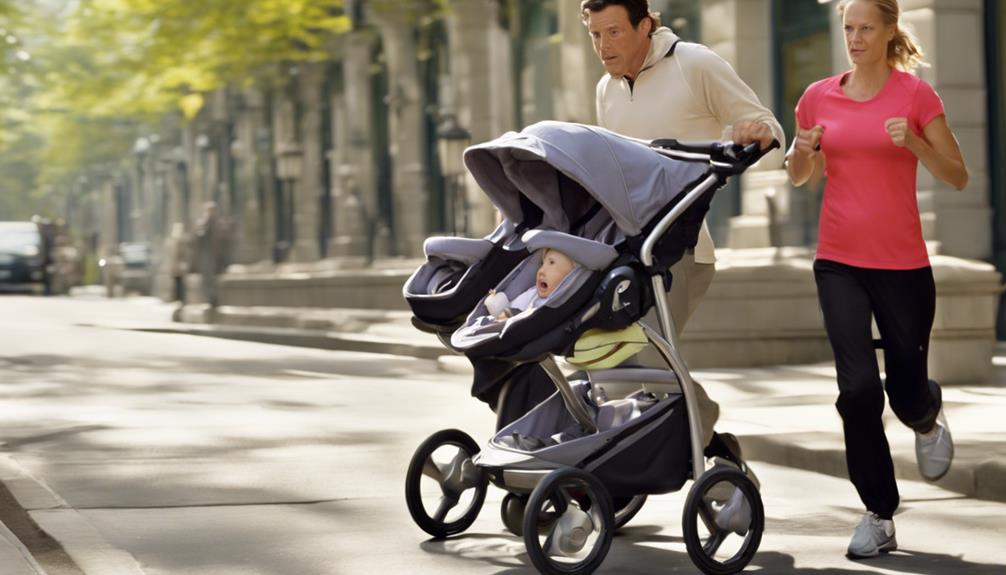
The most common mistake is tightening one part without finding the source. A loose wheel may be caused by a damaged axle or bearing, not by a fastener that simply needs more force.
Other mistakes include:
- Inflating tires by feel instead of using a gauge
- Running with a swiveling front wheel unlocked
- Ignoring a shake that began after an impact
- Carrying a heavy bag on one side
- Using a replacement wheel from another model
- Lubricating a sealed bearing with the wrong product
- Testing repairs with a child in the stroller
- Assuming a new stroller needs no inspection
- Using the stroller on terrain outside its instructions
A new stroller can still arrive with a loose wheel, a shipping issue, or an assembly error. Check every wheel and lock before the first use.

Frequently asked questions
Is it normal for a jogging stroller to shake on gravel?
Some vibration is normal on gravel, roots, cracks, and uneven paths. A strong side-to-side wobble is not. Test the stroller on smooth pavement. If it shakes there too, inspect the wheel, tire pressure, alignment, and axle.
Should the front wheel be locked when jogging?
Usually, yes, if your stroller has a fixed-wheel running mode. A locked front wheel helps the stroller track straight. Follow your model’s manual because the locking method and running limits vary.
Can low tire pressure make a stroller pull to one side?
Yes. Unequal pressure changes how each tire rolls and can make the stroller pull. Inflate all tires to the model’s specified pressure, then retest on a flat surface.


How often should I check a jogging stroller?
Check the wheels, tires, brake, front-wheel lock, and frame before each run. Perform a closer inspection after storage, transport, a curb impact, or any change in steering.
Can I still use the stroller if it shakes only at high speed?
Do not keep running to see whether it improves. A high-speed shake may point to alignment, tire, bearing, or wheel damage. Have the stroller inspected and test it at walking speed only until the cause is corrected.
Conclusion
A shaking jogging stroller most often has a wheel, tire, alignment, axle, or hardware problem. Start with the safest checks: remove the child, lock the brake, inspect each wheel, set tire pressure correctly, and confirm that the front wheel locks and tracks straight.
If the frame is bent, a wheel is damaged, or the shake remains after basic maintenance, stop using the stroller for jogging. Use the owner’s manual and contact the manufacturer or a qualified repair service for the correct part and fix.
