
Introduction
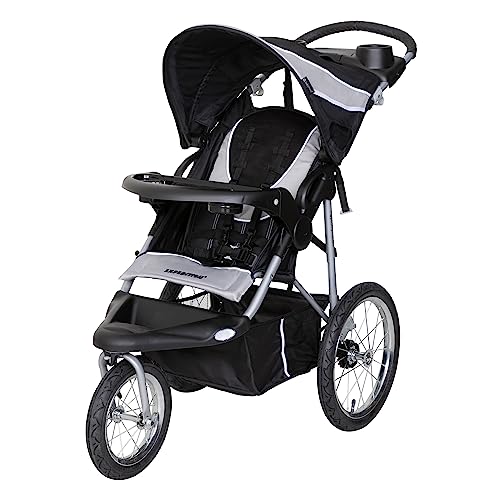
A good jogging stroller is a stable, three-wheel stroller built for running on smooth paths. It should have a lockable front wheel, a strong five-point harness, a parking brake, a wrist strap, good suspension, and tires that match your route.
For most families in the United States, the best choice is not the lightest stroller. It is the one that stays steady at speed, fits your child correctly, and works well on the roads or trails you use. A jogging stroller also must suit your child’s age and your running plans.
A stroller labeled “jogger” is not always ready for running. Some three-wheel strollers are made only for walking. Always check the owner’s manual before you run with a child.

What makes a jogging stroller good?
A good jogging stroller has features that help it move in a straight line, absorb bumps, and stop with control. It should also let you keep one hand on the handle while the other hand manages a leash or water bottle.


The most useful features are:
- A lockable or fixed front wheel
- A five-point safety harness
- A wrist safety strap
- A hand-operated brake
- A parking brake
- Large air-filled or air-like tires
- Strong suspension
- A padded, adjustable handlebar
- A sun canopy with good coverage
- A seat that reclines for comfort
- A frame that feels solid but is not too hard to lift
- Clear instructions for running, walking, folding, and cleaning
A good jogging stroller should also have a clear use limit. The manual should state the child’s minimum age, maximum weight, and whether running is allowed.
A fixed front wheel matters most
A stroller with a swiveling front wheel is easy to turn while walking. At running speed, however, a free-swiveling wheel can move suddenly when it meets a crack, stone, or edge in the path.
A fixed front wheel gives better tracking. Some jogging strollers use a wheel that can switch between swivel and fixed modes. This design is useful if you want one stroller for daily walks and runs.
For running, lock the front wheel before you start. Test it while walking first. It should stay straight without pulling to one side.
Hand brakes and parking brakes do different jobs
A hand brake helps you control the stroller on a hill or during a slow-down. A parking brake keeps the stroller from rolling when you stop.
One does not replace the other. Use the parking brake whenever the stroller is still, even for a short stop. Do not leave a child alone in the stroller.
Air tires can improve comfort
Large air-filled tires often roll well over rough pavement, packed dirt, and park paths. They can also make the ride less harsh for the child.
They have a trade-off: air tires can lose pressure or get punctures. Check tire pressure before longer runs. Follow the pressure range in the manual or on the tire. Do not guess if the stroller maker gives a specific range.
Foam-filled tires need less care. They may be a better fit if you want simple upkeep or often run near sharp gravel.

Jogging stroller versus regular stroller
A jogging stroller is designed for forward movement at a higher speed. A regular stroller is mainly designed for walking and daily tasks.


The difference is not only the number of wheels. A good jogging stroller usually has a longer wheelbase, stronger tracking, larger wheels, and better suspension. It may also include a hand brake and wrist strap.
| Feature | Jogging stroller | Regular stroller |
|---|---|---|
| Main use | Running and walking | Walking and errands |
| Front wheel | Often fixed or lockable | Usually swiveling |
| Tires | Larger, often air-filled | Smaller and often solid |
| Suspension | Built for uneven paths | Varies by model |
| Hand brake | Common on running models | Less common |
| Folded size | Often larger | Often smaller |
| Best surface | Paved paths and firm trails | Floors, sidewalks, and shops |
A three-wheel stroller is not automatically a jogging stroller. A lightweight travel stroller with three wheels may lack the frame strength, wheel design, brake, or tracking needed for running.
The same rule applies to an all-terrain stroller. “All-terrain” may mean it can handle grass or gravel at walking speed. It does not prove that the stroller is safe for jogging.
When can a baby ride in a jogging stroller?
Most babies should not ride in a jogging stroller while you run until they have enough head and neck control. Many manufacturers set this point at about 6 months, but the correct age depends on the stroller and the child.
The American Academy of Pediatrics advises parents to follow the stroller maker’s age guidance. A stroller that reclines flat is not automatically safe for running with a young infant. Running creates force and movement that are different from a calm walk.
Before using a jogging stroller, check all of these points:
- Read the manual for the exact model.
- Confirm the minimum age for walking.
- Confirm the minimum age for jogging or running.
- Check whether the seat can recline during use.
- Confirm the maximum child weight.
- Use only approved accessories.
- Ask your child’s pediatrician if your child was born early or has a health concern.
Do not use a car seat adapter for running unless the stroller maker clearly says that running with that setup is allowed. Many adapters are intended for walking only. A car seat can also raise the child’s center of gravity and change stroller balance.

How to choose the right jogging stroller
Choose a stroller by matching its design to your child, route, storage space, and running style. A stroller that works well on a flat paved trail may be a poor choice for steep hills or narrow paths.
1. Start with your running surface
Your route is one of the strongest buying factors.
- Paved sidewalks and greenways: A lighter jogger with medium tires may be enough.
- Rough pavement and park paths: Look for larger tires and effective suspension.
- Packed dirt: Choose a model with strong tracking and a fixed front wheel.
- Loose gravel, sand, or deep mud: Many jogging strollers will struggle. Check the manual and do not assume “all-terrain” means suitable for every surface.
- Hilly routes: A hand brake can give you more control, but it does not replace a safe pace.
If your route includes busy streets, choose a stroller with reflective details or add approved visibility gear. Follow local traffic laws and use marked crossings. A stroller is not a substitute for a safe route.
2. Check fit and control
Stand behind the handlebar. Your shoulders should stay relaxed while your hands hold the bar. A handlebar that is too low can make long runs uncomfortable.
Test the stroller with weight in the seat, if possible. Push it in a straight line. It should not drift sharply. Turn the front wheel between swivel and locked modes. Then test the hand brake and parking brake on a gentle, safe surface.
A stroller that is hard to steer when empty may feel different with a child inside. This is why an in-store test or a return policy can matter.


3. Check the harness and seat
The harness should fit snugly over the child’s shoulders and hips. The buckle should be secure but easy for an adult to release.
Look for:
- A five-point harness
- Adjustable shoulder straps
- A padded seat
- A seat that supports the child’s head and back
- A recline that works without loosening the harness
- Fabric that can be removed or cleaned
Never add a thick, loose insert that is not approved for the stroller. It can affect harness fit. Keep straps flat and free from twists.
4. Consider storage and transport
Jogging strollers often take more trunk space than regular strollers. Measure your vehicle’s cargo area before buying.
Check:
- Folded height and width
- Folded length
- Wheel removal, if available
- Carry handle or lift points
- Weight
- Whether the folded stroller stands on its own
- Storage basket access when the seat is reclined
A heavy stroller may feel stable on a trail but be difficult to lift into an SUV or carry up stairs. Stability and portability often involve a trade-off.

Which features are worth paying for?
Pay first for safety and control. Add comfort and convenience features only after the core design meets your needs.
Features that usually matter most
Lockable front wheel: This is central to straight tracking while running.
Hand brake: Helpful on hills and when you need to slow the stroller without gripping the handle tightly.
Wrist strap: It helps keep the stroller near you if you lose your grip. Use it around your wrist whenever you jog.
Suspension: Useful on rough pavement and firm trails. It cannot make unsafe terrain safe.
Large tires: Larger wheels can roll over small bumps more easily than small wheels.
Adjustable handlebar: Helpful when two adults of different heights use the stroller.
Large canopy: It protects from sun, but it does not replace sunscreen, shade, hydration, or weather judgment.
Features that may be less important
A built-in speaker, phone pocket, or large cup holder may be convenient. These features do not make a stroller safer for running.


An infant car seat option may help with errands. It should not influence a running decision unless the maker approves that exact setup for jogging.
A one-hand fold can save time. Still, check whether the folded stroller fits your car and whether the fold is easy to use with the wheels and accessories attached.
Is a used jogging stroller a good idea?
A used jogging stroller can be a good value if you inspect it carefully. Safety parts can wear out even when the fabric looks clean.
Before buying, check:
- The model name and manufacture date
- The CPSC recall database
- The owner’s manual
- Frame cracks, bends, or loose joints
- Wheel damage and axle play
- Tire condition and air leaks
- Brake function
- Front-wheel lock function
- Harness buckle and straps
- Wrist strap condition
- Missing parts
- Signs of rust or water damage
Do not buy a used stroller if the frame is damaged, the brake does not work, or the harness is missing. Avoid homemade repairs to structural or restraint parts.
The U.S. Consumer Product Safety Commission provides recall information at cpsc.gov/Recalls. Product safety rules can change, so check the current record for the exact brand and model.

How to use a jogging stroller safely
A good stroller still requires safe use. Start with a short walk, then a slow jog on a smooth, open path.
Use this checklist before each run:
- Confirm that your child meets the manual’s running age and weight limits.
- Check that the harness is snug and correctly placed.
- Lock the front wheel.
- Attach the wrist strap.
- Test the parking brake before placing your child inside.
- Check tire pressure and wheel security.
- Remove loose items from the seat.
- Make sure the canopy and storage basket do not block your view.
- Keep both hands available when the route is crowded or uneven.
- Slow to a walk near turns, driveways, curbs, pedestrians, and cyclists.
Do not hang a heavy bag from the handlebar. Extra weight can make the stroller tip backward. Keep heavy items low and within the maker’s storage limits.
Do not run on stairs, escalators, steep slopes, icy paths, deep sand, or terrain that prevents full control. Never use a jogging stroller while cycling, skating, or riding a scooter unless the manufacturer specifically designed and approved that use.
Heat also matters. A canopy can trap warm air. On hot days, use shade, water, light clothing, and frequent checks. Babies and young children can overheat quickly.

Common mistakes to avoid
Mistake 1: Choosing by wheel count alone
Three wheels help with maneuvering, but they do not prove that a stroller is built for jogging. Check the manual and the safety features.
Mistake 2: Running with a young infant
A deep recline does not equal running approval. Follow the exact age guidance for the stroller.
Mistake 3: Leaving the front wheel unlocked
A swivel wheel is useful for walking. It can reduce control during a run. Lock it before jogging if the manual calls for a locked wheel.


Mistake 4: Skipping the wrist strap
A wrist strap is useful only when attached and worn. Do not wrap it around the handlebar and assume it will protect you.
Mistake 5: Ignoring tire pressure
Low pressure can change handling. High pressure can reduce comfort and may increase the risk of tire damage. Use the maker’s stated range.
Mistake 6: Treating the stroller like a bicycle trailer
A jogging stroller is not automatically approved for cycling or towing. Use only the products and activities listed in the manual.
Mistake 7: Buying a stroller that is too large for your life
A very capable stroller can still be a poor choice if you cannot lift it, store it, or fit it in your car. Daily use matters more than a long feature list.
A simple jogging stroller decision guide
Use this quick guide to narrow your choice:
- You run mostly on smooth sidewalks: Choose a lighter model with a lockable front wheel, wrist strap, and five-point harness.
- You run on mixed park paths: Prioritize larger tires, suspension, and steady tracking.
- You run on hills: Look for a hand brake and practice slowing before carrying a child.
- You need one stroller for errands and runs: Choose a model with a swivel-to-lock front wheel, but confirm that the manual allows running.
- You have limited trunk space: Compare folded size before wheel size or accessory options.
- You are buying for an infant: Confirm the running age limit first. Do not use an infant car seat for running unless the maker clearly permits it.
- You are buying used: Check recalls and test every safety part before purchase.
The best jogging stroller is the one that meets the safety rules, fits your child, matches your route, and remains practical enough to use often.

Frequently asked questions
Can you jog with any three-wheel stroller?
No. Some three-wheel strollers are made for walking only. A stroller should be used for jogging only when the manufacturer’s manual says it is designed and approved for that activity.
Is a fixed front wheel better than a swivel wheel for running?
A fixed front wheel usually gives better straight-line control. A swivel wheel is easier for tight turns at walking speed. A lockable wheel gives you both options, as long as you lock it before running when required.
Do jogging strollers need air tires?
No. Air tires can provide a smooth ride and roll well over some rough surfaces, but they need pressure checks and can puncture. Foam-filled or solid tires reduce maintenance. The better choice depends on your route and willingness to maintain the tires.
Can a newborn use a jogging stroller?
Usually not for jogging. Follow the exact manual for the stroller. Many models do not allow running until the baby is about 6 months old and has adequate head and neck control. Ask a pediatrician about special health concerns.
Is a jogging stroller safe on gravel?
It depends on the gravel, stroller, and speed. Firm, packed gravel may be acceptable for some models. Loose stones can make the stroller unstable. Check the manual, lock the front wheel, slow down, and stop if you cannot maintain full control.
How often should you check a jogging stroller?
Check the harness, brakes, wheel lock, tires, and frame before each run. Clean dirt from the wheels and joints. Follow the manual for lubrication, tire care, and replacement parts.
Conclusion
A good jogging stroller is stable, controllable, and approved for running by its manufacturer. Look for a lockable front wheel, five-point harness, wrist strap, parking brake, hand brake, strong tires, and useful suspension.
Choose for your real route, your child’s age, and your storage limits. Before the first run, read the manual, inspect the stroller, and practice at walking speed. If the stroller pulls, wobbles, rolls when braked, or does not fit your child correctly, do not run with it until the problem is fixed.
For current safety information, consult the American Academy of Pediatrics, the U.S. Consumer Product Safety Commission, and the manual for the exact stroller model.
