
Introduction
Yes, you can run with a stroller in the United States—but only when you use a true jogging stroller, your child is ready, and the route and pace are safe. A standard everyday stroller is made for walking, not running.
Most U.S. pediatric safety guidance advises waiting until a baby can sit upright without help. This often happens around 6 months, but the correct age depends on the child and the stroller manual. Some jogging stroller makers set a later minimum age for running.
Check the stroller manual first. Then ask your child’s pediatrician if your baby was born early, has low muscle tone, or has another health concern.


What kind of stroller is safe for running?
A jogging stroller is built to handle motion, bumps, and faster speeds. It should have features that help it stay stable and easy to control.
Look for:
- A fixed or lockable front wheel
- Three large wheels
- A strong frame
- A five-point harness
- A wrist strap
- A hand brake
- A deep seat with good support
- A sun canopy
- Air-filled or large rubber tires
- A clear age and weight limit
- A manual that allows jogging or running
A stroller with a small swivel front wheel may turn well in a store. It can also wobble or pull to one side at running speed. If the front wheel locks, use the locked position for running unless the manual says otherwise.
The stroller must be made for running. “All-terrain” does not always mean “safe for jogging.” Some all-terrain models are meant for walking on grass, gravel, or packed trails only.
The U.S. Consumer Product Safety Commission recommends using stroller restraints and following the maker’s instructions. The American Academy of Pediatrics also advises parents to use the safety harness and avoid hanging heavy items from the handles.
Running stroller checklist
| Feature | Why it matters |
|---|---|
| Fixed front wheel | Helps prevent sudden turns |
| Three-wheel design | Tracks well at a steady pace |
| Wrist strap | Helps keep the stroller with you |
| Hand brake | Gives more control on hills |
| Five-point harness | Keeps the child securely seated |
| Large tires | Roll better over small bumps |
| Adjustable handle | Helps you keep good posture |
| Manufacturer approval for running | Confirms the intended use |
No stroller removes all risk. A fixed wheel can make sharp turns harder. Large tires can still catch on holes, curbs, or loose rocks. You must keep both hands ready and watch the path ahead.

When can a baby ride in a jogging stroller?
Your baby should meet both the stroller maker’s age requirement and the physical readiness requirement before you run.
For many babies, that means they can:
- Sit upright without support
- Hold their head steady
- Stay centered in the seat
- Tolerate the motion without slumping
- Remain properly secured by the harness
A stroller that accepts an infant car seat is not automatically safe for running with an infant car seat. Car-seat adapters often support walking use only. Follow the exact manual for the stroller, car-seat adapter, and infant seat.


Some manufacturers allow a baby to ride in a jogging stroller for a walk before they allow running. These are different uses. A slow walk creates less force and vibration than a run.
Age is only a guide
Six months is a common minimum used in general pediatric advice for jogging stroller use. It is not a universal rule. One child may sit well at 6 months, while another may need more time.
Read the manual for your exact stroller model. If the manual gives a later age, use the later age. If the manual is missing, contact the manufacturer before running.
Do not run with a newborn in a regular stroller seat unless the stroller is specifically approved for that use. Newborns lack the head and trunk control needed for many upright seats.
If your child slumps, leans hard to one side, or cannot keep the head in a stable position, stop. A pediatrician can help you decide when your child is ready.

How to start running with a stroller
Start with a short, flat test. Your first session should help you learn how the stroller moves, not test your speed.
1. Inspect the stroller
Before each run, check:
- Tire pressure
- Wheel attachment
- Front-wheel lock
- Brakes
- Harness
- Wrist strap
- Seat recline
- Handle adjustment
- Loose parts
- The weight in the storage basket
Use the tire pressure listed on the tire or in the manual. Underinflated tires can make steering harder. Overinflated tires may reduce comfort and grip.
2. Secure your child
Place your child in the seat. Fasten the five-point harness snugly. The straps should hold the child in place without pressing into the neck.
Keep the child’s hands and feet inside the stroller. Do not let the child stand, lean over the side, or ride on the footrest.
Store bags low and under the seat. Do not hang a heavy bag from the handle. Extra weight at the handle can increase the chance of tipping.
3. Test the stroller while walking
Walk on a flat path first. Check whether the stroller pulls, shakes, or feels hard to turn. Practice stopping with the hand brake and using the parking brake.
Then walk faster. If the stroller feels unstable during a brisk walk, do not run with it.
4. Run for short periods
Try a few minutes of easy jogging. Keep the pace slow. Leave space between the stroller and other people.


Avoid sprinting, sudden turns, and hard stops. The stroller may not stop as quickly as you can.
5. Check your child
Look for signs of discomfort:
- Slumping
- Crying in a way that does not settle
- A sweaty back
- Pale or flushed skin
- Cold hands or feet
- Trouble keeping the head steady
- Straps that no longer fit correctly
Stop and adjust the plan if you see these signs. Do not cover the stroller with a blanket to block sun or cold air. It can trap heat and reduce airflow.
Where is it safest to run with a stroller?
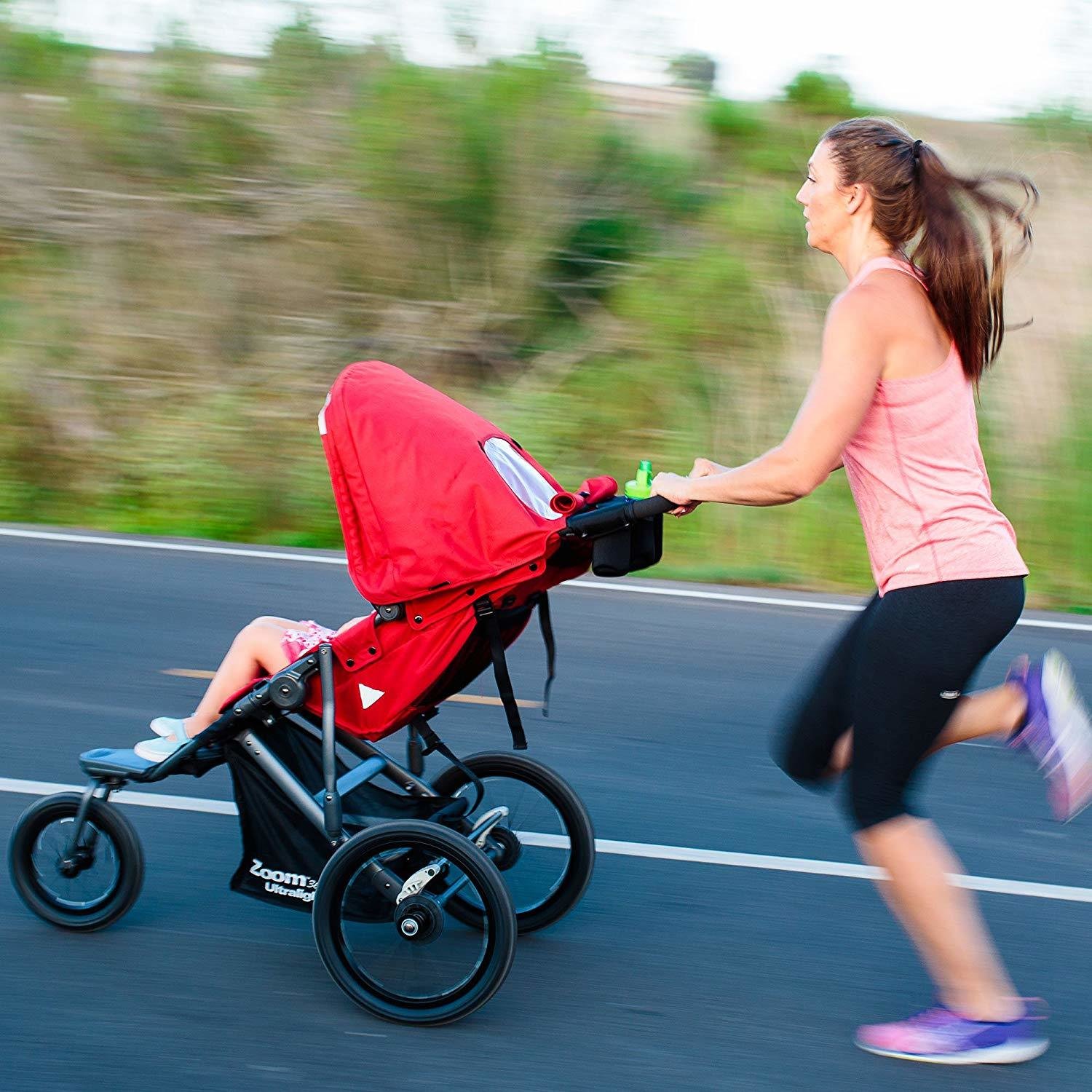
A smooth, flat, low-traffic route is the best place to begin. A paved park path or a wide sidewalk may work well if local rules allow it.
Avoid:
- Streets without a safe sidewalk
- Crowded sidewalks
- Steep hills
- Wet leaves
- Ice or snow
- Loose gravel
- Deep sand
- Narrow trails
- Roots and large rocks
- Areas with poor lighting
- Roads with fast bike traffic
- Trails with sudden drops
Check local park rules before using a running stroller on a shared path. Some paths limit stroller use during busy hours. Others separate walkers, runners, and cyclists.
Run with the stroller facing the direction of travel. Stay alert near driveways, crossings, and trail intersections. Do not assume drivers or cyclists see you.
Heat and weather matter
Babies and young children can overheat faster than adults. A stroller canopy can provide shade, but it does not make hot weather safe.
On warm days:
- Run during a cooler part of the day
- Choose a shaded route
- Dress the child in light clothing
- Keep the canopy open enough for airflow
- Take frequent breaks
- Check the child’s neck and back for heat
Never leave a child alone in a stroller, even for a short time. In cold weather, avoid bulky layers that interfere with the harness. Add warmth only in a way approved by the stroller maker and keep the straps snug.

Should you run uphill or downhill with a stroller?
Flat ground is the safest place to learn. Hills add force, speed, and braking demands.
Uphill
Running uphill can make the stroller harder to push. You may lean forward and lose a comfortable grip. A long hill can also tire your legs before you notice how much control you have lost.
Walk steep hills at first. Keep both hands on the handle and use the wrist strap.
Downhill
Downhill running creates a greater risk of the stroller moving faster than you can control. Do not let the stroller roll ahead of you. Use the hand brake as directed by the manual, but do not rely on the brake as a substitute for a steady grip.


Walk down steep hills. Keep the stroller close to your body. If you cannot stop quickly and safely, the hill is not suitable for running.
Curbs and uneven ground
Do not run over a curb. Stop, slow down, and move the stroller over it with control. Lift only as the stroller manual allows.
A small hole can cause a sudden jolt. A large bump can tip the stroller or throw the child against the harness. Scan the path several yards ahead.

How should you change your running form?
Running with a stroller changes your balance and arm movement. It can also affect your stride.
Use these habits:
- Keep your back upright
- Hold the handle with one or both hands as the manual permits
- Keep the wrist strap attached
- Take shorter steps
- Slow down before turns
- Keep the stroller close
- Look ahead, not down at the child every second
- Stop fully before checking a phone, drink, or toy
Many runners push with one hand and switch sides. This can help reduce strain, but only if you can keep the stroller straight and controlled. Use two hands on uneven paths, hills, crossings, and crowded routes.
Do not tie the wrist strap to your body while running if the manual warns against it. The strap is meant to help prevent the stroller from rolling away, not to replace your grip.
Your body may tire before the stroller appears difficult to control. If your shoulders, wrists, or back hurt, stop. A stroller run should not force you into a painful posture.

Can you use a regular stroller for jogging?
Usually, no. A regular stroller is not designed for the repeated impact and speed of running.
A standard stroller may have:
- Small wheels
- A short wheelbase
- A free-swiveling front wheel
- A weaker frame
- Less suspension
- No wrist strap
- No hand brake
- A seat approved for walking only
It may be fine for a walk on a smooth sidewalk. That does not make it suitable for jogging.
Do not modify a stroller by adding homemade wheel locks, straps, weights, or other parts. An alteration can affect balance and may void the warranty. Use a model that the manufacturer clearly approves for running.
A baby carrier is also not a direct substitute for a jogging stroller. Running with a child in a carrier can add fall and impact risks. Follow the carrier maker’s instructions and seek medical advice before using one for exercise.

What are the most common mistakes?
The most common mistake is treating a jogging stroller like a faster version of a walking stroller. It is a separate type of equipment with different control needs.
Avoid these errors:
Running before the child is ready
A baby who can sit in a stroller may not yet tolerate running motion.Leaving the front wheel unlocked
A free wheel may turn suddenly at speed.Skipping the wrist strap
Even a strong adult can trip or lose grip.Hanging a heavy bag from the handle
This can change the stroller’s balance.Running on a steep route first
Hills make stopping harder.Using headphones that block sound
You need to hear bikes, cars, and other people.Covering the stroller with a blanket
This can limit airflow and trap heat.Ignoring the manual
Age, weight, wheel, and brake rules vary by model.Running while distracted
Put your phone away until you stop.Continuing after a problem appears
Pulling, shaking, a loose wheel, or a failed brake needs attention before the next run.


When should you stop the run?
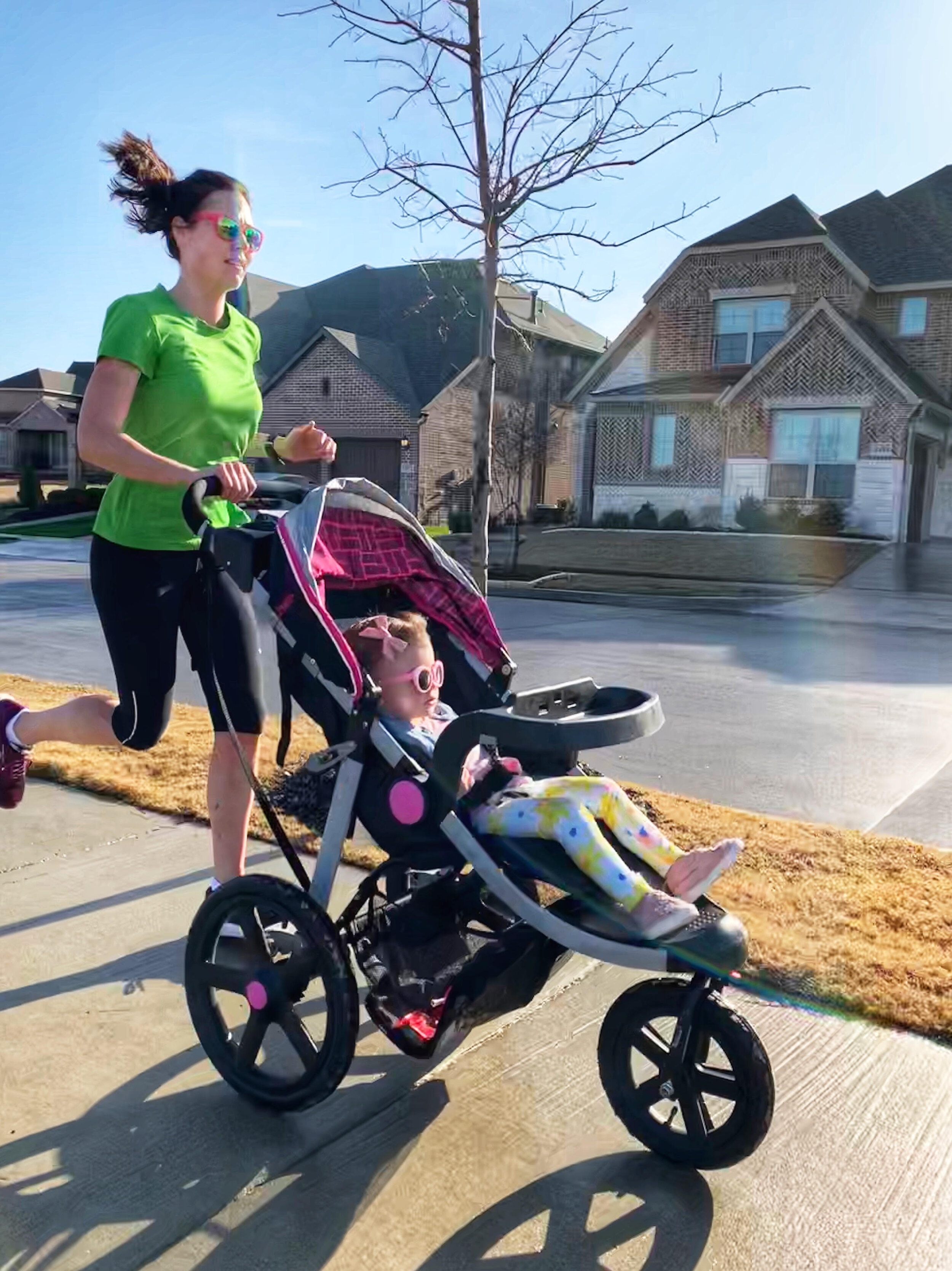
Stop right away if the stroller tips, hits an object, develops a loose part, or becomes hard to control. Move to a safe place before inspecting it.
Stop if your child:
- Slumps out of position
- Cannot keep the head steady
- Seems too hot or cold
- Has trouble breathing
- Vomits
- Becomes unusually sleepy
- Cries continuously
- Shows signs of pain
- Has a loose or uncomfortable harness
Call 911 for severe breathing trouble, loss of consciousness, a serious fall, or another emergency. For less urgent concerns, contact your child’s pediatrician.
After a crash or tip-over, inspect the frame, wheel mounts, harness, brakes, and seat. Do not keep running with a damaged stroller. Check the manufacturer’s repair and replacement guidance.
A pediatrician can give more specific advice when your child has a medical condition, was born premature, or has delayed motor skills. The stroller maker can answer questions about the model’s approved age, weight, terrain, and running use.
A simple decision guide
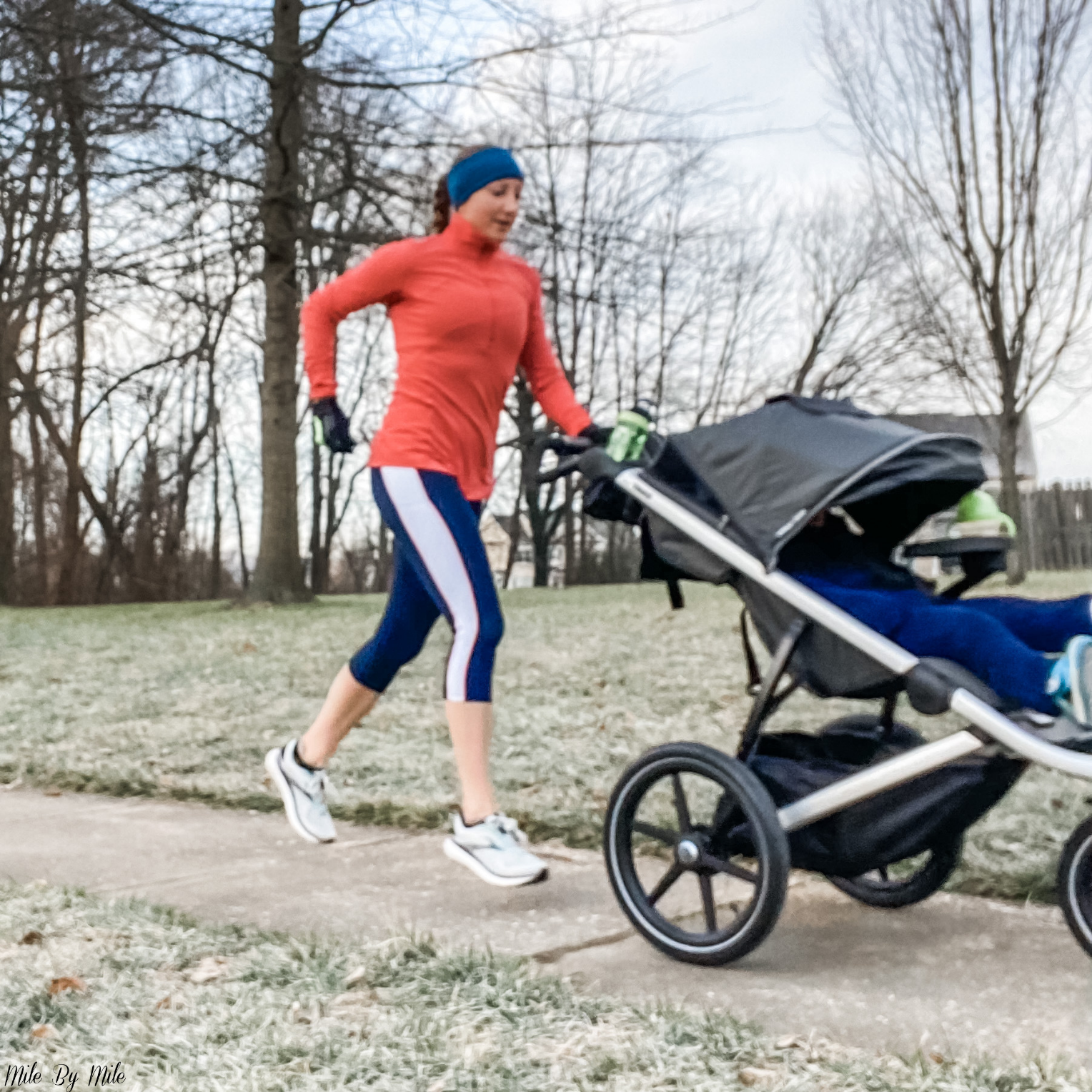
Use this guide before your first run.
| Question | If the answer is yes | If the answer is no |
|---|---|---|
| Is the stroller made for running? | Continue checking | Walk only or use a jogging stroller |
| Does the manual allow your child’s age and weight? | Continue checking | Do not run yet |
| Can your child sit upright and control the head? | Continue checking | Wait and ask the pediatrician if unsure |
| Is the harness fitted correctly? | Continue checking | Adjust it before moving |
| Is the front wheel set as required? | Continue checking | Follow the manual |
| Is the route flat, clear, and low traffic? | Start slowly | Choose another route |
| Can you stop and steer with control? | Try a short jog | Walk or stop |
| Are weather and temperature reasonable? | Continue with checks | Wait for safer conditions |
The safest first run is short, slow, flat, and close to home. Add distance only after you and your child handle the stroller well.
Key takeaways
- Yes, running with a stroller can be okay when the stroller is designed for running and your child is ready.
- Check the manual for the exact age, weight, wheel, and terrain rules.
- Many babies need to sit upright and control their head before running use.
- Use the five-point harness and wrist strap every time.
- Lock or set the front wheel as the manual directs.
- Start on a smooth, flat, low-traffic route.
- Walk steep hills and avoid rough or crowded paths.
- Watch your child for heat, discomfort, slumping, or unusual sleepiness.
- Stop if the stroller pulls, shakes, tips, or becomes hard to control.
FAQs
Is running with a stroller harder than running without one?
Yes. A stroller changes your arm position, balance, stride, and stopping distance. It can also make hills and turns harder. Start at an easy pace and use shorter steps.
Can I jog with a 3-month-old in a stroller?
Usually not in an upright jogging seat. A 3-month-old may not have enough head and trunk control for running motion. Follow the stroller manual and ask your pediatrician. An infant car seat adapter does not automatically make running safe.
Is it safe to run with a stroller on a sidewalk?
It can be, if the sidewalk is wide, smooth, clear, and away from heavy traffic. Watch for driveways, cracks, curbs, pedestrians, bikes, and sudden crossings. Local rules may also apply.
Can I run with a stroller in the rain?
Light rain may be allowed by some manufacturers, but check the manual. Rain can reduce visibility, make surfaces slippery, and affect braking. Do not use a rain cover that blocks airflow or creates heat buildup.
Do I need a three-wheel stroller to run?
Most jogging strollers use three wheels because the design can track well at speed. The key issue is not the wheel count alone. The stroller must be approved by its maker for running and must give you stable control.
Can I run while pushing the stroller with one hand?
Some runners do, but two hands offer more control. Use both hands on hills, turns, rough ground, crossings, and crowded paths. Never give up a secure grip just to drink, text, or change music.
How fast can I run with a jogging stroller?
There is no safe speed that fits every parent, child, stroller, or route. Use a pace that lets you stop quickly, steer around hazards, and keep the stroller close. For many parents, that means an easy jog rather than a race pace.
Conclusion
Running with a stroller can be a practical way to exercise with your child. The right stroller, the right age, and the right route matter more than speed or distance.
Start with a careful equipment check and a short walk. Move to a slow jog only when the stroller feels stable and your child remains comfortable. When in doubt, follow the manufacturer’s instructions and ask your child’s pediatrician for advice.
