
Mealtimes can be fun for babies when they feel safe, involved, and free to explore. Offer age-appropriate foods, let your baby touch and taste them, eat together, and keep pressure low. In the United States, most babies start solid foods at about 6 months, when they show signs of readiness—not simply because they reach a certain age. CDC guidance can help you decide when to begin.
Fun does not mean making a baby eat more. It means building a calm routine where your baby can learn about food at their own pace.
When Are Babies Ready for Fun Mealtimes?
Most babies are ready for solid foods at around 6 months. Before then, breast milk or infant formula remains the main source of nutrition. Ask your child’s doctor if you are unsure when to start, especially if your baby was born early or has a health condition.


Look for these signs of readiness:
- Your baby can sit upright with good head and neck control.
- Your baby opens their mouth when food comes near.
- Your baby reaches for food or watches others eat.
- Your baby can move food from the front of the mouth toward the back.
- Your baby has lost the reflex that pushes food out with the tongue.
Your baby does not need teeth to begin soft foods. Babies can use their gums to mash food, but the food must be soft and prepared in a safe shape.
Set up a safe eating space
Use a stable high chair with:
- A firm, upright seat
- A safety strap
- Good foot support when possible
- A clear eating surface
- No loose toys, pillows, or blankets
Always keep your baby seated and watch them while they eat. The American Academy of Pediatrics advises caregivers to learn the difference between gagging and choking and to prepare foods to reduce choking risk.
Do not feed your baby while they are lying down, crawling, walking, or riding in a car. Avoid distractions that make it harder to watch your baby.

10 Ways to Make Mealtimes Fun for Babies
The best activities are simple. Babies enjoy your face, voice, and attention more than special gear.
1. Let your baby explore food with their hands
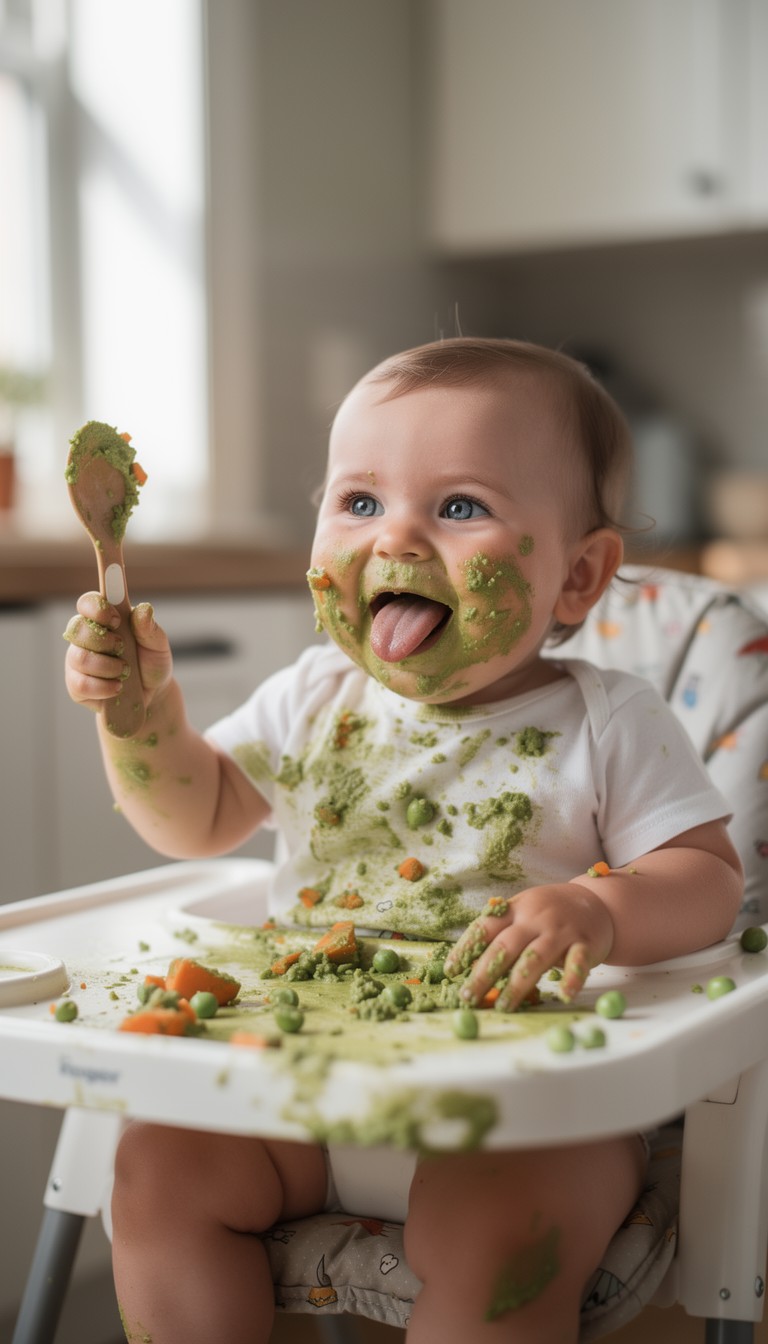
Touch is part of learning. Put a small amount of soft food on the tray and let your baby squish, smear, and pick it up.
This may look messy, but the mess has a purpose. Your baby is learning how food feels, how much pressure to use, and how to move food toward the mouth.
Try soft foods such as:
- Steamed broccoli florets with a soft stalk
- Ripe banana strips
- Soft-cooked sweet potato
- Avocado slices
- Toast strips with a thin spread of smooth nut butter
- Soft pieces of ripe pear
The food should be soft enough to mash between your thumb and finger.


2. Eat together
Babies learn by watching. Sit with your baby during meals and let them see you eat a range of foods.
You do not need to prepare a separate family meal every time. Set aside a safe portion before adding salt or spicy ingredients. For example, your baby may eat soft vegetables, shredded meat, beans, pasta, or mashed food from the family meal.
Family meals also teach social skills. Your baby sees how to hold a cup, use a spoon, pause between bites, and enjoy time with others.
3. Use a cheerful food script
Talk about food in a relaxed way:
- “You found the banana.”
- “That carrot feels soft.”
- “You took a small bite.”
- “You hear the spoon tap the bowl.”
- “You are touching the peas.”
This helps your baby connect words with sights, smells, tastes, and textures. Keep your voice warm, but avoid turning each bite into a performance.
4. Offer two safe choices
Once your baby eats a few foods, offer two options. You might place soft avocado and banana on the tray or offer oatmeal and mashed sweet potato.
Choices give your baby a small sense of control. Keep both choices safe and suitable for your baby’s feeding stage. A choice does not mean your baby must eat either food.
5. Add color and shape
Babies notice bright colors and clear shapes. You can arrange soft foods in small groups instead of mixing everything into one bowl.
For example, place:
- Green avocado
- Orange sweet potato
- Soft shredded chicken
- A piece of toast
Do not make food shapes that create a choking risk. Skip hard raw vegetables, whole grapes, popcorn, nuts, and other high-risk foods.
6. Make spoon practice playful
Give your baby a second spoon while you use one. Your baby can hold, tap, or bring it to their mouth.
Preload a soft-tipped spoon with mashed food and place it on the tray. Your baby may pick it up and guide it to their mouth. This approach supports self-feeding without requiring perfect spoon skills.
Expect spills. At first, the goal is practice, not neat bites.
7. Play with temperature and texture safely
Babies can learn that foods feel different. Offer foods that are:


- Smooth, such as plain yogurt or mashed avocado
- Lumpy, such as mashed beans
- Soft and finger-shaped, such as cooked vegetables
- Moist, such as shredded meat mixed with a soft food
Introduce new textures slowly, but do not keep babies on only smooth purées for too long. The CDC recommends offering foods that match a child’s developmental ability and preparing them to lower choking risk.
Test the temperature before serving. Food should be warm or cool, not hot.
8. Create a predictable routine
A simple routine can make meals feel safe:
- Wash your baby’s hands.
- Place your baby in the high chair.
- Offer a small amount of food.
- Eat and talk together.
- Watch for signs that the meal is over.
- Clean your baby and the eating space.
A routine helps your baby know what comes next. Keep meals short if your baby loses interest. Young babies may need only a few minutes of food practice at first.
9. Sing one short song
A quiet song can make the transition to the high chair pleasant. Choose one song for handwashing or sitting down.
Keep the song short and calm. If your baby becomes distracted, stop singing and return attention to the food and your baby’s cues.
10. Celebrate curiosity, not bites
Say “You tried it” or “You touched it” instead of “Good job, you finished it.”
A baby may smell, lick, hold, or spit out a food. Those actions can be part of learning. Praise exploration rather than the amount eaten.
Use Responsive Feeding to Keep Meals Positive
Responsive feeding means you provide safe food and your baby decides whether to eat and how much to eat. This approach respects hunger and fullness cues.
Your job is to decide:
- What food to offer
- When to offer it
- Where your baby will eat
Your baby decides:
- Whether to eat
- Which food to try
- How much to eat
This does not mean letting your baby eat only one preferred food forever. Offer a safe food your baby likes with a new or less familiar food. Stay calm if the new food is ignored.
Watch for hunger cues
A hungry baby may:


- Reach for food
- Open their mouth
- Lean toward food
- Get excited when food appears
- Make sounds to ask for more
Watch for fullness cues
A full baby may:
- Turn away
- Close their mouth
- Push food away
- Slow down
- Lose interest
- Become fussy or distracted
Stop when your baby shows they are full. Do not pressure your baby to take “one more bite.” Pressure can make meals stressful and may teach a baby to ignore their own fullness.
The USDA MyPlate Plan for infants and toddlers offers general guidance on feeding young children. Your pediatrician can give advice that fits your baby’s growth and health.

Make Baby Food Safe While Keeping It Interesting
Fun meals must also be safe. Choking is different from gagging. Gagging is often noisy and may include coughing or retching. Choking can be quiet because the airway may be blocked.
Learn infant CPR and choking first aid from a qualified organization, such as the American Red Cross or another recognized training provider.
Prepare common foods safely
| Food | Safer preparation for babies |
|---|---|
| Grapes and cherry tomatoes | Cut lengthwise into small pieces or quarters, based on developmental ability |
| Hot dogs and sausages | Avoid coin-shaped slices; cut lengthwise into thin strips and small pieces |
| Meat | Cook until tender and shred or finely mince |
| Vegetables | Cook until soft; cut into manageable pieces |
| Apples | Cook until soft or grate finely; avoid hard raw chunks |
| Nut butter | Spread thinly or mix into a soft food; never offer a thick scoop |
| Fish | Remove all bones and flake into small pieces |
| Beans | Mash or flatten them |
| Popcorn and whole nuts | Do not offer to young children because they are choking hazards |
The table gives general examples, not a substitute for supervision or medical advice. Food size and shape should match your baby’s skills.
Avoid foods that are not safe or needed yet
For babies younger than 12 months:
- Do not give honey, including honey in cooked foods, because of the risk of infant botulism.
- Do not use cow’s milk as the main drink. Small amounts in foods may be used in some cases, but ask your pediatrician if you have questions.
- Avoid juice. The American Academy of Pediatrics recommends whole fruit instead of juice for babies.
- Limit foods high in added sugar and sodium.
- Avoid unpasteurized milk, cheese, or juice.
- Avoid raw or undercooked eggs, meat, seafood, and sprouts.
Read the CDC’s food and drinks to limit guidance for current U.S. recommendations.
Introduce Allergens Without Making Meals Scary
Common allergens include peanut, egg, dairy, wheat, soy, sesame, fish, shellfish, and tree nuts. Current U.S. guidance does not support delaying all common allergens for most babies. In fact, early introduction of peanut and egg in age-appropriate forms may help lower allergy risk for some infants.
Ask your child’s doctor before introducing peanut or other allergens if your baby has severe eczema, an existing food allergy, or another condition that raises concern. The National Institute of Allergy and Infectious Diseases provides U.S. guidance on peanut allergy prevention.


Offer only safe forms:
- Thin smooth peanut butter mixed into oatmeal or yogurt
- Well-cooked egg, mashed or cut into small soft pieces
- Plain yogurt
- Soft tofu
- Finely ground wheat products
Never give a spoonful of thick peanut butter or whole nuts. Introduce one new allergen at a time when possible. Watch for symptoms such as hives, swelling, repeated vomiting, coughing, wheezing, or trouble breathing.
If your baby has trouble breathing, swelling of the tongue or throat, or other signs of a severe reaction, call 911 right away.

What to Do When Your Baby Refuses Food
Food refusal is common. A baby may reject a food because of its taste, texture, temperature, tiredness, teething, illness, or lack of hunger.
Try this sequence:
- Check basic needs. Is your baby tired, sick, or too hungry?
- Offer a small amount without pressure.
- Pair the new food with a familiar food.
- Change the texture or preparation.
- Try again on another day.
- Keep your response calm.
Do not chase your baby with a spoon or distract them with a screen to make them eat. A baby may need repeated, relaxed exposure before accepting a food. Acceptance can take time, and one refusal does not mean the food is permanently disliked.
Call your pediatrician if your baby regularly coughs or chokes while eating, has trouble swallowing, loses weight, has very few wet diapers, shows signs of dehydration, or has a strong reaction to food. A pediatrician may refer you to a feeding therapist, dietitian, or other qualified professional.

Common Mealtime Mistakes to Avoid
Turning meals into a contest
A baby does not need to clean the tray. Pressure can make eating feel like a test.
Offering too many foods at once
A crowded tray can overwhelm a new eater. Start with one or two small portions. Add more as your baby gains skill.
Serving unsafe shapes
A healthy food can still be dangerous if served in a hard, round, sticky, or coin-shaped form. Change the shape and texture before serving.
Using screens as entertainment
Screens can distract babies from hunger and fullness cues. Face-to-face talk, songs, and shared meals offer interaction without taking attention away from eating.
Expecting every meal to be tidy
Mess is normal during food learning. Use a washable mat, bib, and easy-to-clean clothes. Clean the tray after the meal, but do not make cleanliness the main goal.
Comparing your baby with another baby
Babies develop feeding skills at different rates. Compare your baby with their own progress, not with a sibling, friend, or social media post.

A Simple Sample Routine
Here is one example for a baby who has started solids and can sit safely. It is not a required schedule.
Before the meal: Wash hands and prepare soft food. Check that the food is cool enough and cut safely.
At the meal: Seat your baby upright. Offer a small portion of two foods. Eat your own meal nearby and talk about what your baby is doing.
During the meal: Let your baby touch the food. Offer a preloaded spoon if they want it. Follow signs of hunger and fullness.
At the end: Stop when your baby loses interest or shows fullness. Wipe your baby’s hands and face. Clean the tray and floor.
Breast milk or infant formula continues to provide key nutrition during the first year. Solid foods gradually add practice, tastes, textures, and nutrients.

FAQs About Fun Mealtimes for Babies
How can I make baby-led weaning fun and safe?
Offer soft foods in shapes your baby can hold, such as strips or large soft pieces. Keep your baby upright and watch them at all times. Learn infant choking first aid, and avoid hard, round, sticky, or tough foods.
Should I entertain my baby while feeding?
Use conversation, songs, and eye contact, but avoid forcing attention away from the food. The goal is a pleasant shared meal, not a distraction that makes your baby eat without noticing hunger or fullness.
How many times should I offer a food my baby rejects?
Offer it again on different days without pressure. A baby may need many calm chances to learn a new taste or texture. Stop if your baby becomes upset, and try again later.
Can babies eat spicy food?
Babies can explore many family foods, but keep portions low in salt and avoid very hot temperatures. Strong spice may upset some babies, so introduce it in a small amount and watch your baby’s response.
What if my baby only wants fruit?
Keep offering fruit along with vegetables, grains, beans, eggs, meat, or other suitable foods. Use a preferred food beside a less familiar food. If your baby eats a very limited range or has feeding problems, ask your pediatrician for help.
Key Takeaways
- Start solids when your baby shows readiness, usually around 6 months.
- Make mealtimes fun through touch, choice, family meals, talk, and safe textures.
- Let your baby decide whether to eat and how much.
- Keep your baby upright and supervised during every meal.
- Prepare foods to reduce choking risk.
- Avoid honey before 12 months and do not use cow’s milk as the main drink before age 1.
- Ask your pediatrician about allergies, feeding concerns, or delayed skills.
Conclusion
Fun baby mealtimes do not need special recipes or expensive tools. A safe seat, soft food, your calm attention, and time to explore are enough.
Offer food, follow your baby’s cues, and let learning happen slowly. When meals feel relaxed rather than forced, your baby can build feeding skills and a positive relationship with food.
