
Introduction
If you breastfeed and want to add formula, start slowly and keep the change simple. Offer a small amount of iron-fortified infant formula when your baby is calm, use a bottle or feeding method that works for your baby, and continue breastfeeding as often as you want.
Most babies need time to learn a new taste, nipple, and way of feeding. Some accept formula at once. Others need several low-pressure tries. If you want to protect your milk supply, replace feeds gradually rather than stopping several breastfeeding sessions at once.
This guide is for families in the United States. Follow the formula label and guidance from your baby’s pediatrician. Babies born early, babies with health problems, and babies with feeding or growth concerns may need a specific formula and a more careful plan.

When can a breastfed baby start formula?
A healthy full-term baby can usually receive infant formula from birth when breast milk is not enough, is not available, or the family chooses combination feeding. There is no need to wait for a certain age to introduce formula.


For babies younger than 12 months, use infant formula made for babies. Choose an iron-fortified formula unless your child’s health care professional recommends another type. Do not use cow’s milk, plant milk, toddler drinks, or homemade formula as a replacement for breast milk or infant formula.
The American Academy of Pediatrics recommends exclusive breastfeeding for about the first six months when possible, followed by continued breastfeeding with complementary foods. This is a goal, not a judgment. Combination feeding can support a baby’s nutrition while also meeting a family’s health, work, sleep, or personal needs.
Ask your baby’s pediatrician before changing formula if your baby has:
- Poor weight gain
- Frequent vomiting
- Blood or mucus in the stool
- Severe eczema
- Trouble breathing during or after feeds
- A known milk allergy
- A medical condition
- A history of prematurity
- Trouble swallowing or tiring during feeds
Breast milk, formula, and combination feeding
Combination feeding, also called mixed feeding, means a baby receives both breast milk and infant formula. You can give them in separate feeds or, in some cases, in the same bottle.
Separate feeds are often easier at first. They let you see how much formula your baby takes and avoid wasting breast milk if your baby does not finish the bottle.
Your baby may drink different amounts at different feeds. Breastfed babies do not always follow the same schedule as formula-fed babies. Watch your baby’s hunger and fullness cues instead of trying to make every feed the same size.

How to introduce formula step by step
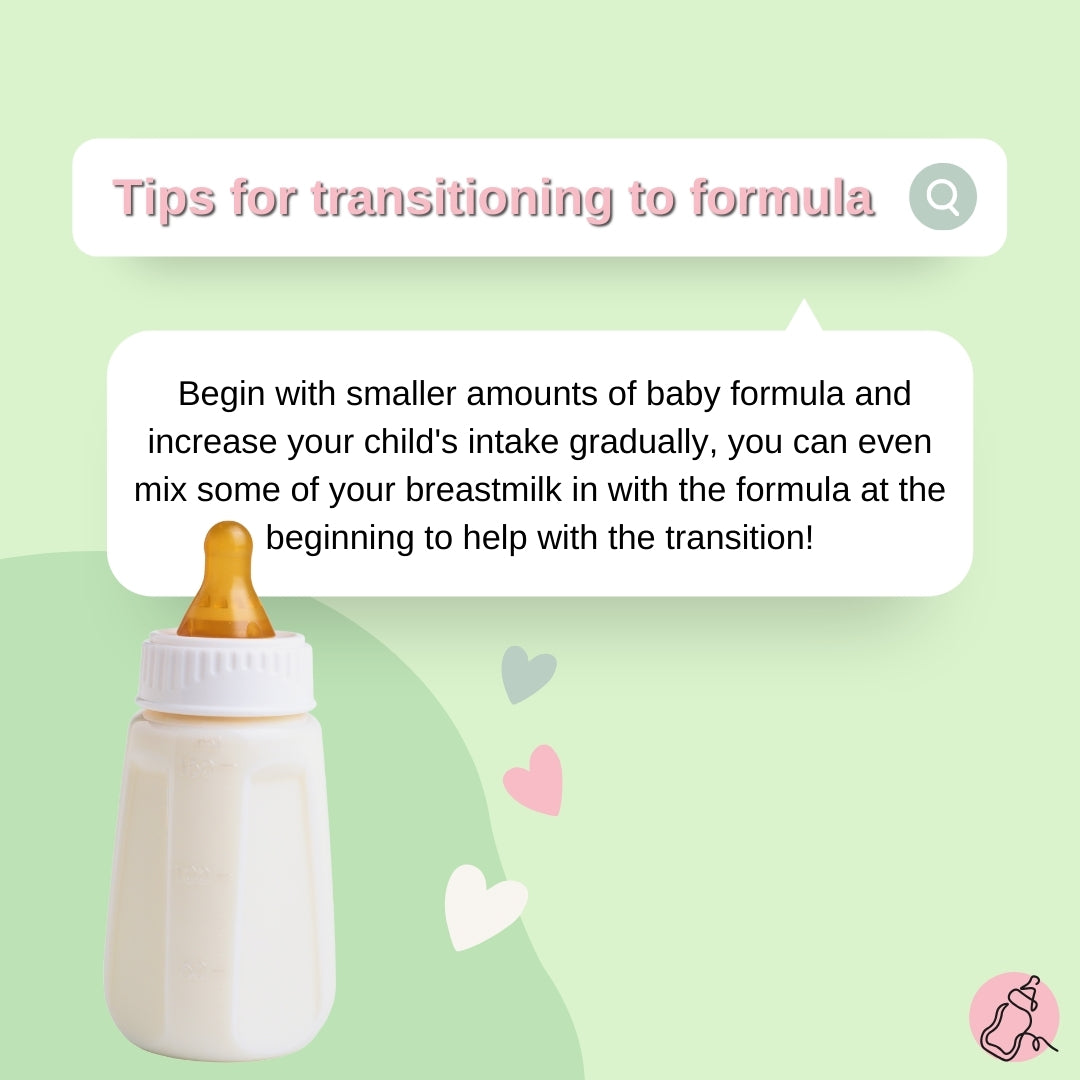
The easiest approach is to begin with one small formula feed while keeping the rest of your usual breastfeeding routine.
1. Choose a calm time
Offer formula when your baby is alert but not very hungry. A crying, frantic baby may have less patience for a new bottle or taste.
Try the first bottle:
- After a short breastfeeding session
- When another trusted adult can offer it
- During a relaxed daytime feed
- When you have enough time to pause and try again
a baby who refuses formula is not being difficult. The smell, taste, flow, and sucking pattern may all feel new.


2. Start with a small amount
Begin with a small serving, such as 1 to 2 fluid ounces, unless your pediatrician gives you a different amount. Your baby may take only a few sips at first.
Do not force the bottle into your baby’s mouth or insist that your baby finish it. Stop when your baby turns away, closes the mouth, relaxes the hands, or loses interest.
If the bottle goes well, keep offering a similar amount for a few days. You can slowly increase it based on your baby’s hunger cues.
3. Let someone else offer the first bottle
Some breastfed babies refuse formula from the nursing parent because they expect to breastfeed when that parent is near. Another adult may have better results.
You can also try:
- Holding your baby in a slightly upright position
- Using a slow-flow nipple
- Warming the formula to about body temperature
- Offering the bottle before your baby becomes very hungry
- Trying a different bottle shape if refusal continues
Never heat formula in a microwave. Microwaves can create hot spots. Warm the bottle in warm water, or serve it at room temperature if your baby accepts it.
4. Use paced bottle-feeding
Paced feeding can help a breastfed baby control the flow of milk. Hold the bottle more level than vertical. Let the nipple fill with milk, but do not let milk pour quickly into your baby’s mouth.
Pause every few minutes. Watch for signs that your baby needs a break, such as:
- Slowing or stopping sucking
- Turning the head away
- Milk leaking from the mouth
- Coughing or gulping
- Stiffening the body
- Spreading the fingers
- Falling asleep
Paced feeding does not need to take a fixed number of minutes. The goal is to give your baby time to breathe, pause, and feel full.
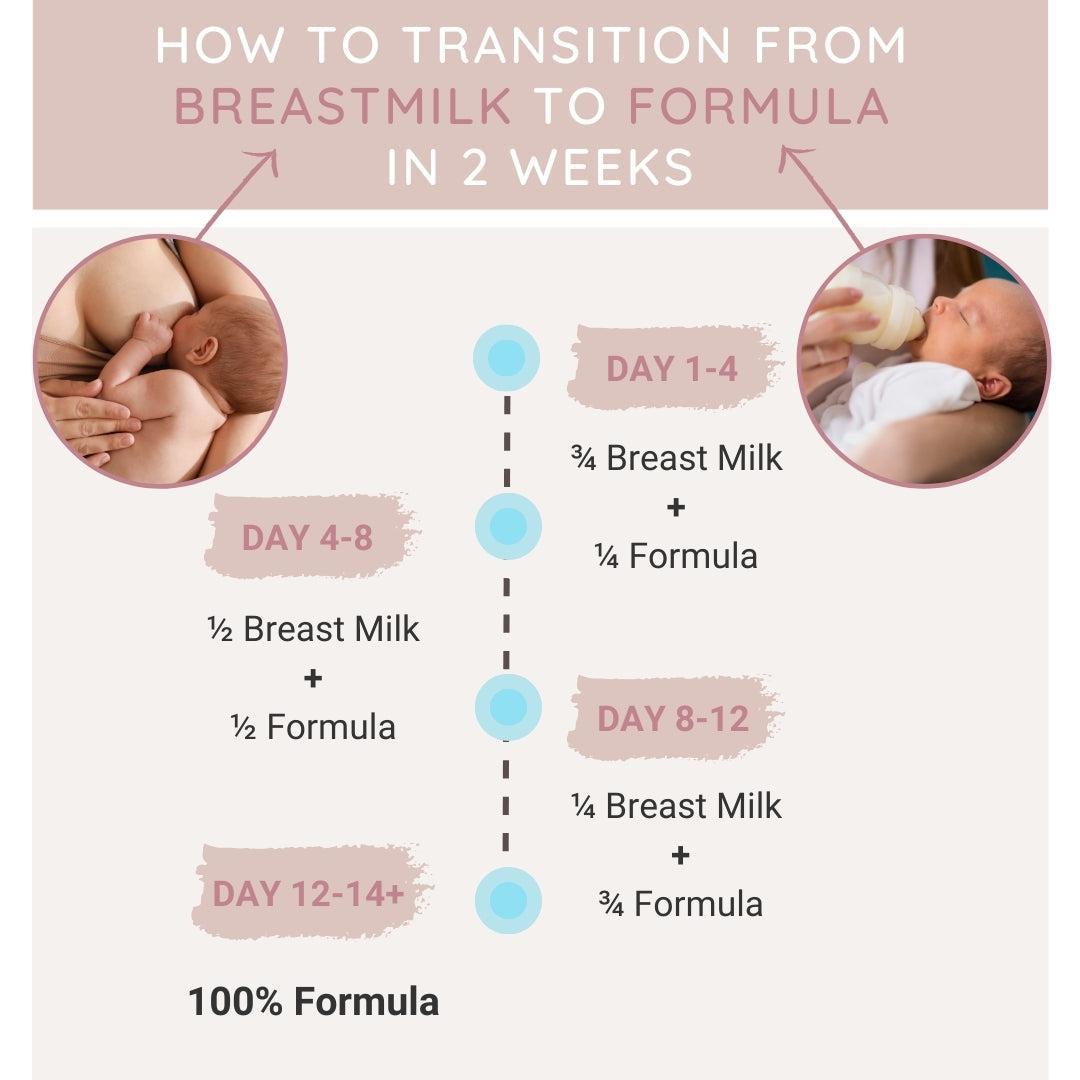
5. Replace one breastfeeding session at a time
If you want to add formula but continue breastfeeding, replace one feed first. Keep that plan for several days before changing another feed.
If you replace a breastfeeding session with formula, your breasts may make less milk at that time. To maintain milk production, breastfeed or pump around the times your baby receives formula.
A gradual plan may look like this:
| Goal | Practical approach |
|---|---|
| Add an occasional bottle | Offer one small formula feed while continuing usual nursing |
| Prepare for child care | Practice one bottle at a similar time each day |
| Reduce pumping at work | Replace one pumping session every few days |
| Wean from breastfeeding | Remove one feed at a time and watch for breast fullness |
| Protect milk supply | Breastfeed or pump regularly when a formula feed replaces nursing |
This is a general example, not a medical schedule. Your baby’s age, weight, feeding pattern, and health can change the right plan.
How to prepare formula safely
Safe preparation matters more than the brand of formula. Read the label each time, especially if you switch between powdered, concentrated liquid, and ready-to-feed formula.
Powdered formula
Powdered formula is not sterile. For most healthy older infants, careful preparation and clean supplies are essential. For babies younger than 2 months, babies born prematurely, or babies with weakened immune systems, ask a pediatrician whether ready-to-feed liquid formula is a safer choice.


To prepare powdered formula:
- Wash your hands with soap and water.
- Clean the bottle, nipple, cap, and mixing supplies.
- Use a safe water source.
- Measure the water first.
- Add the exact number of level scoops listed on the label.
- Shake or mix until the powder dissolves.
- Feed the formula right away when possible.
Never add extra water. Diluted formula may not provide enough nutrients and can disturb a baby’s electrolyte balance. Never add extra powder, cereal, vitamins, or medicine unless a health care professional directs you to do so.
Concentrated liquid formula
Concentrated liquid formula must be mixed with the amount of water stated on the label. Do not use it as if it were ready-to-feed formula.
Ready-to-feed formula
Ready-to-feed formula does not need water added. Pour the needed amount into a clean bottle and follow the storage directions on the package.
Can you mix breast milk and formula in the same bottle?
You can combine breast milk and prepared formula in the same bottle, but prepare the formula with water first. Do not add formula powder directly to breast milk.
A simple method is:
- Mix the formula with water exactly as the label states.
- Add the prepared formula to breast milk if you choose to combine them.
- Feed the mixture promptly.
- Discard leftover milk after the feed.
Many families offer breast milk and formula in separate bottles instead. This may reduce waste because you can save properly stored breast milk if your baby does not finish it.
Formula storage rules
The CDC advises using prepared formula within:
- Two hours after preparation if it stays at room temperature
- One hour from the start of a feeding
- Twenty-four hours if it is prepared and stored in the refrigerator
Do not save formula left in a bottle after your baby drinks from it. Bacteria from the baby’s mouth can grow in the milk.
Use prepared breast milk according to CDC storage guidance. Freshly expressed breast milk may stay at room temperature for up to four hours, in the refrigerator for up to four days, and in the freezer for about six months for best quality. When breast milk and formula are combined, follow the stricter safety rule for the mixture.

How much formula should a breastfed baby drink?
The right amount depends on your baby’s age, size, breast milk intake, and the number of breastfeeding sessions being replaced. There is no single correct bottle size for every baby.
Start with a small amount and offer more if your baby still shows hunger cues. Avoid encouraging your baby to finish a bottle simply because milk remains.
Hunger cues
Your baby may be hungry when they:
- Turn toward the breast or bottle
- Open the mouth
- Bring hands to the mouth
- Lick or smack the lips
- Suck on fingers
- Become more alert or restless


Crying is a late hunger cue. Feeding may be easier before your baby becomes upset.
Fullness cues
Your baby may be full when they:
- Slow down or stop sucking
- Turn away
- Close the mouth
- Relax the hands and body
- Push the bottle away
- Fall asleep after a satisfying feed
A baby who takes a small amount of formula may still be getting breast milk at other feeds. Wet diapers, stool patterns, alertness, and growth offer more useful information than one bottle.
Contact your pediatrician if your baby has fewer wet diapers than usual, seems unusually sleepy, refuses several feeds, vomits repeatedly, or is not gaining weight as expected.

What if your breastfed baby refuses formula?
Formula refusal is common and often improves with calm practice. Try one change at a time so you can tell what helps.
Change the timing
Offer formula when your baby is calm and mildly hungry. Avoid waiting until your baby is very upset. You can offer a small amount after breastfeeding rather than replacing a full feed right away.
Change who gives the bottle
Ask a partner, relative, or child-care provider to try. Keep your body and clothing away from the feeding area if your baby strongly expects to nurse.
Check the bottle flow
A nipple that flows too slowly can frustrate a hungry baby. A nipple that flows too fast can cause coughing, gulping, or refusal. Try a different flow only when needed, and keep the bottle mostly level during paced feeding.
Try the formula at a different temperature
Some babies prefer formula warm. Others accept it at room temperature. Never use a microwave, and test the temperature before feeding.
Avoid pressure
End the attempt after a short, calm try. Offer breastfeeding if that fits your plan. Try again later or the next day.
If your baby repeatedly coughs, chokes, arches, vomits, or struggles to breathe during feeds, stop and contact the pediatrician. A feeding specialist may need to assess swallowing, nipple flow, reflux, or another problem.

How to introduce formula without losing your milk supply
Your milk supply responds to milk removal. When your baby nurses less often, or you pump less often, your body may gradually produce less milk at those times.
To support supply:
- Keep regular breastfeeding sessions.
- Pump when a formula bottle replaces a nursing session.
- Avoid dropping several feeds at once.
- Check that your pump flange fits well.
- Use breast compression or gentle massage if pumping feels less effective.
- Seek lactation help if pumping hurts or milk production drops sharply.
If your goal is to reduce breastfeeding, a gradual change can lower the chance of painful fullness and clogged ducts. Seek care for a red, painful breast with fever or flu-like symptoms, which may signal mastitis.


Formula supplementation does not mean breastfeeding has failed. Some families use one formula bottle each day. Others use formula for many feeds. The safest plan is the one that meets your baby’s needs and works for your family.

Common mistakes to avoid
Avoid these errors when adding formula to a breastfed baby’s routine:
- Mixing formula powder directly into breast milk: Formula powder must be mixed with the correct amount of water first.
- Adding extra water: This can reduce nutrition and may be dangerous.
- Using homemade formula: Homemade recipes may lack key nutrients and may contain unsafe ingredients.
- Using cow’s milk before 12 months: Cow’s milk is not a substitute for infant formula in the first year.
- Propping the bottle: Bottle propping raises the risk of choking, ear infections, and tooth decay. Hold your baby during feeds.
- Forcing the bottle: Pressure can make feeding stressful and may teach a baby to ignore fullness.
- Saving unfinished formula: Throw away formula left after your baby has fed from the bottle.
- Changing formula again and again: Frequent changes can make it hard to identify the cause of symptoms. Ask the pediatrician before switching for suspected allergy or intolerance.
- Assuming every cry means hunger: Babies also cry from tiredness, discomfort, overstimulation, or the need for contact.
If you use a bottle at bedtime, clean your baby’s gums or teeth as advised by the pediatric dentist. Do not put a baby to sleep with a bottle.

When to call your baby’s pediatrician
Call the pediatrician promptly if your baby has signs of dehydration, such as much fewer wet diapers, a dry mouth, no tears when crying, or unusual sleepiness.
Seek urgent medical help for trouble breathing, blue or gray lips, severe weakness, repeated choking, or a serious allergic reaction.
Ask for medical guidance if your baby develops:
- Hives or swelling
- Wheezing
- Repeated vomiting
- Blood in the stool
- Persistent diarrhea
- Severe constipation
- Poor weight gain
- Pain during most feeds
- A sudden and lasting change in feeding
Do not diagnose a cow’s milk protein allergy or lactose intolerance on your own. True lactose intolerance is uncommon in young babies, and symptoms such as gas, spit-up, or loose stools can have many causes.
Frequently asked questions
Should I give formula before or after breastfeeding?
If you want to protect your milk supply, breastfeed first and offer formula afterward when your baby still seems hungry. If you are replacing a full nursing session, formula can take the place of that feed. Your pediatrician or lactation consultant can help create a plan based on your baby’s growth.
What formula is best for a breastfed baby?
There is no single best formula for every baby. A standard iron-fortified infant formula is suitable for many healthy full-term babies. Special formulas may be needed for prematurity, allergy, metabolic conditions, or other medical needs. Ask the pediatrician before choosing a specialty formula.
Can formula cause constipation?
A change in stool color, smell, or texture can happen after formula is added. Some babies have firmer stools. Call the pediatrician if stools are hard and painful, contain blood, or your baby has ongoing vomiting, poor feeding, or a swollen belly.
How long does it take a breastfed baby to accept formula?
Some babies accept formula on the first try. Others need several calm attempts over days or weeks. If refusal continues, check the nipple flow, feeding position, timing, and formula type with your pediatrician.
Can I switch between breast milk and formula in the same day?
Yes. Many families breastfeed at some feeds and use formula at others. Track wet diapers, feeding behavior, and growth rather than expecting every feed to look the same.
Conclusion
To introduce formula to a breastfed baby, begin with a small, calm feed and increase slowly if your baby accepts it. Use iron-fortified infant formula, prepare it exactly as directed, practice paced bottle-feeding, and follow your baby’s hunger and fullness cues.
If you want to continue breastfeeding, replace feeds gradually or pump when formula replaces nursing. Contact your baby’s pediatrician for concerns about growth, dehydration, allergy symptoms, choking, or ongoing feeding trouble.
