
For families in the United States, a baby usually stays in a bassinet for the first few months of life. Many babies outgrow it between 3 and 5 months, but age is only a rough guide. The safest time to stop using a bassinet is when your baby reaches the maker’s weight or size limit, starts to roll or push up, or can move into an unsafe position.
Always follow the bassinet’s manual. A baby may need to move to a crib sooner than expected if they become more mobile.

The short answer: When should a baby stop using a bassinet?
A baby should stop sleeping in a bassinet when any one of these events happens:
- Your baby reaches the bassinet’s weight limit.
- Your baby reaches the height or length limit.
- Your baby can roll from back to side or from back to stomach.
- Your baby pushes up on their hands or knees.
- Your baby can sit up or pull up.
- Your baby can move into a side, corner, or folded position.
- The bassinet looks too small for safe movement.
- The manufacturer says the product is no longer suitable.


Some bassinets have a weight limit near 15 to 20 pounds. Others have different limits. Do not guess. Check the product label and manual for the exact limit.
A bassinet is not meant to hold a baby until a set birthday. Development and product limits matter more than age.
What is the difference between a bassinet, cradle, and crib?
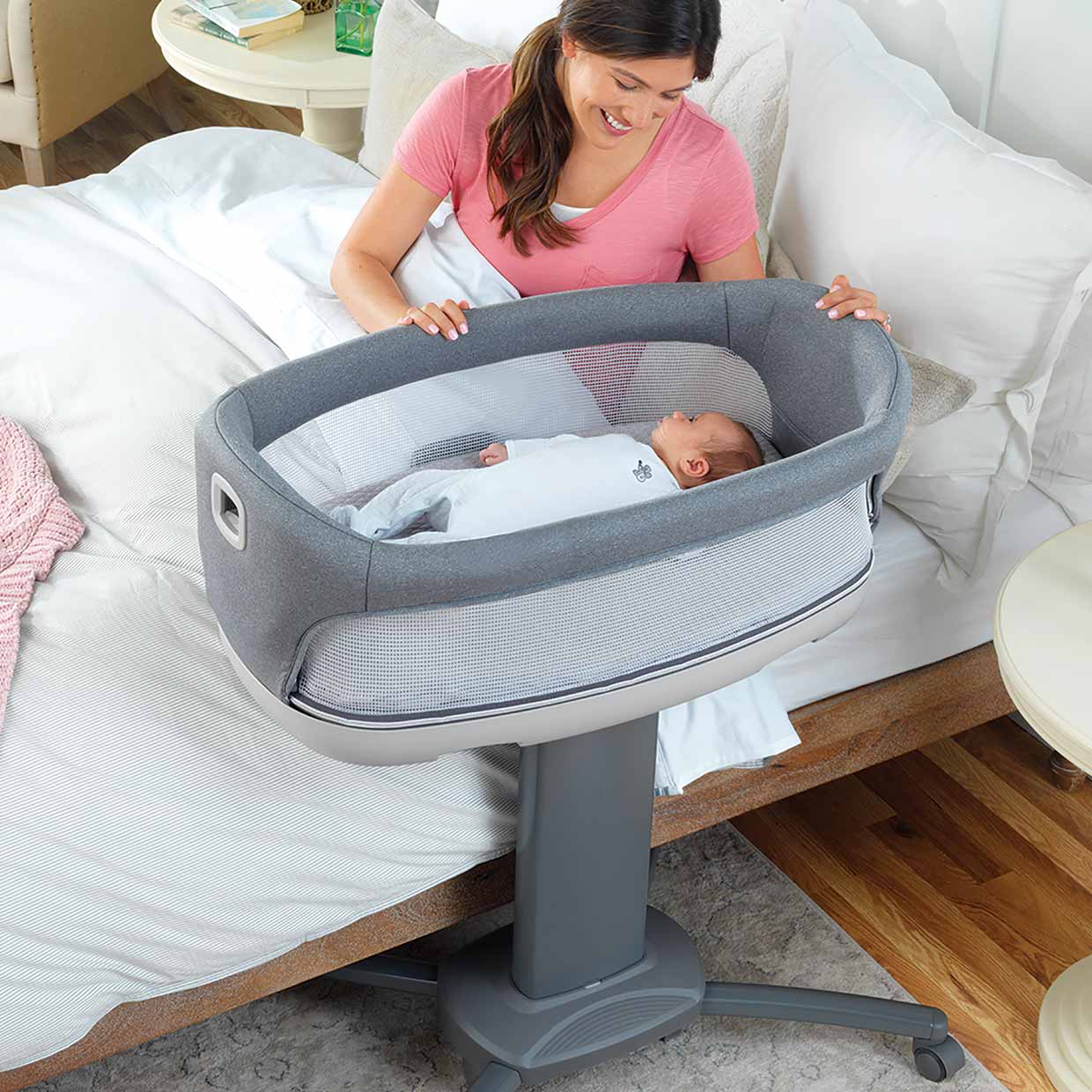
A bassinet is a small sleep space made for young babies. It often has low sides and may sit next to an adult bed. Some models stand on their own. Others attach to a frame or work as a bedside sleeper.
A cradle is also made for infants, but it may rock or swing. A crib is larger and is designed for longer use. Many babies move from a bassinet to a full-size crib or a portable crib.
The words can overlap in product listings. The key question is not the name. Ask whether the product has:
- A firm, flat, level sleep surface
- A fitted sheet made for that exact model
- Strong, secure sides
- Clear instructions for the baby’s age, size, and development
- No pillows, blankets, bumpers, positioners, or loose items
In the United States, bassinets, cradles, and bedside sleepers must meet applicable federal safety rules. The U.S. Consumer Product Safety Commission’s bassinet and cradle guidance explains product requirements for manufacturers and sellers.
A product that looks cozy is not always safe for sleep. Avoid using loungers, nests, inclined sleepers, swings, car seats, or strollers as routine sleep spaces unless the product is specifically designed and approved for sleep and used as directed.

What signs show that a baby has outgrown a bassinet?
The clearest sign is new movement. A baby who can roll, push up, or shift across the sleep space may no longer be safe in a bassinet.
Stop using the bassinet if your baby can roll
Move your baby out of the bassinet when they show signs of rolling. This includes:


- twisting the hips and shoulders to one side
- Rolling from the back to the side
- Rolling from the back to the stomach
- Rolling from the stomach to the back
- Repeatedly rocking onto one side
You do not need to wait for a full roll. Early attempts can happen quickly, especially when a parent is asleep.
Once a baby can roll, swaddling must stop. The American Academy of Pediatrics safe sleep guidance advises stopping swaddling when a baby shows signs of trying to roll.
Stop using it if your baby can push up
A baby who pushes up on their hands, elbows, or knees may be able to shift into a position that the bassinet was not made to handle. The same applies if your baby can sit, kneel, or pull up.
Do not lower the bassinet’s side unless the manufacturer designed it to adjust that way. Do not add a strap, net, cushion, or homemade barrier to keep a baby inside.
Stop using it if your baby reaches the product limit
The weight limit is only one part of the rule. A bassinet may also have a length limit or a maximum developmental stage.
For example, a 12-pound baby who can roll may need to leave the bassinet before a heavier baby who cannot yet move. The product manual controls the final decision.

Can a baby sleep in a bassinet overnight?
Yes. A baby can sleep overnight in a bassinet if the bassinet is approved for infant sleep and used according to its instructions.
The sleep setup should meet the core guidance from the AAP and other U.S. health and safety groups:
- Place the baby on their back for every sleep.
- Use a firm, flat, level mattress.
- Use only a fitted sheet made for the bassinet.
- Keep the bassinet in the parents’ room, near the bed but on a separate surface.
- Keep the sleep area free of pillows, quilts, blankets, toys, and bumper pads.
- Do not use a weighted sleep product unless your child’s health care professional gives specific advice.
- Keep smoke, alcohol, cannabis, and sedating medicines away from the baby’s sleep area.
Room sharing is different from bed sharing. The AAP recommends room sharing without bed sharing, ideally for at least the first six months and preferably for the first year when practical.
A bassinet can support room sharing during the early months. When your baby outgrows it, move the crib or portable crib into your room if you want to continue room sharing.

How long can a baby sleep in a bedside bassinet?
A baby can use a bedside bassinet only while the baby meets the product’s limits. A bedside bassinet does not remain safe simply because it is attached to the adult bed.
Check these details before each use:
- Product type: Confirm whether it is a true bedside sleeper, a bassinet, or an adult-bed attachment.
- Attachment: Follow the maker’s steps for straps, height, and fit.
- Bed gap: Make sure there is no dangerous gap between the adult mattress and the product.
- Side position: Use the side in the position required by the manual.
- Baby’s development: Stop when the baby rolls, pushes up, sits, or reaches the limit.
- Condition: Replace the product if the frame, mesh, fasteners, or mattress is damaged.


Never place a regular bassinet on an adult bed unless the manufacturer specifically made it for that use. Do not use pillows or rolled towels to fill gaps.
Bedside products can make nighttime care easier, but convenience does not change the safe-use rules.
Bassinet age and weight limits
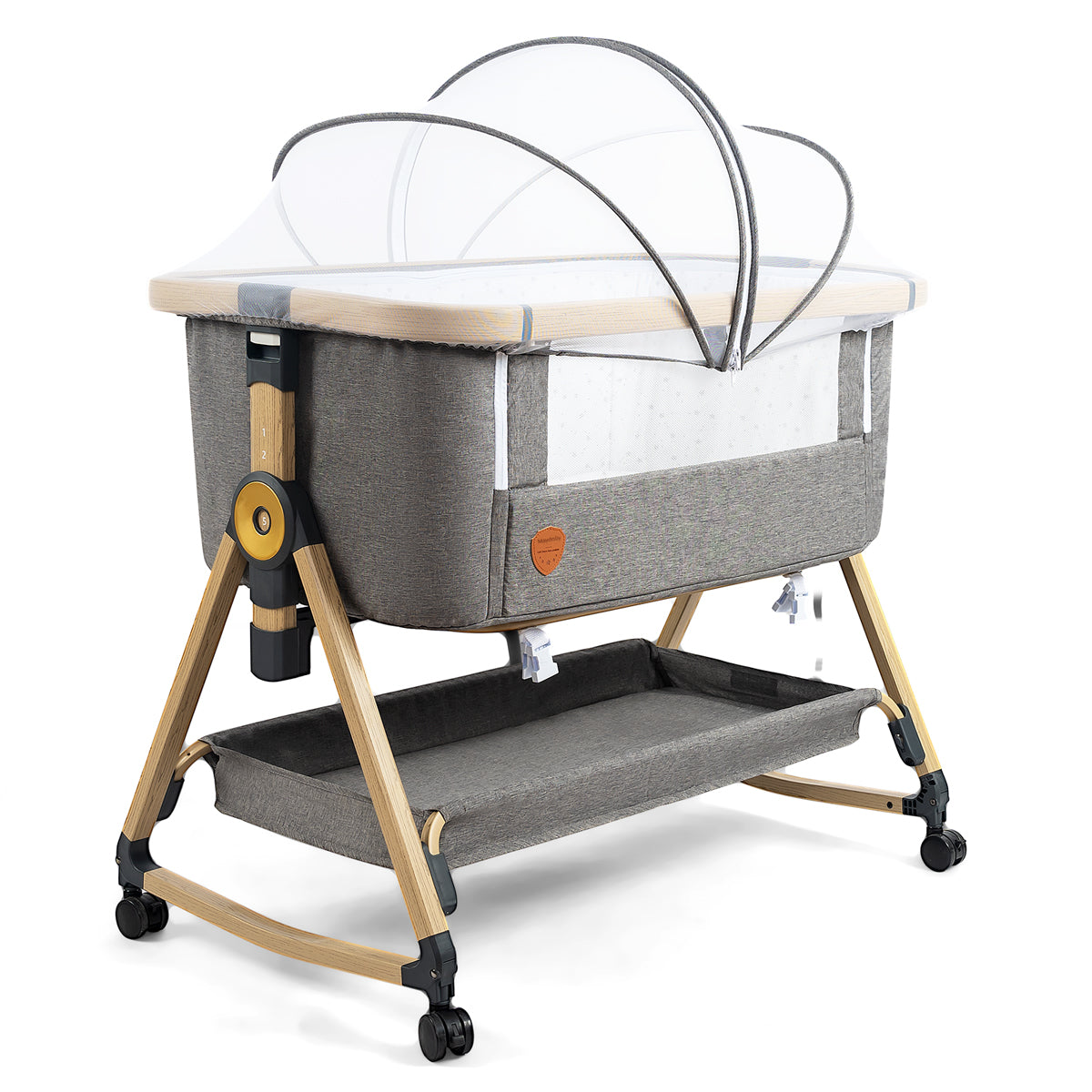
The table below gives common planning ranges. It is not a substitute for the manual because products differ.
| Baby or product stage | What to do |
|---|---|
| Newborn to about 3 months | A bassinet may be suitable if the baby sleeps on a firm, flat surface and stays within the limits. |
| About 3 to 5 months | Check often for rolling, pushing up, and a growing body. Many babies move during this period. |
| Around 6 months | Many babies are already in a crib. The AAP still recommends room sharing when practical. |
| Any age | Stop at once if the baby reaches a limit or shows unsafe movement. |
These age ranges are planning tools, not safety rules. Some babies outgrow a bassinet at two months. Others may remain within the size limits longer, but developmental signs still require a move.
A simple decision rule is:
Use the earliest limit: age guidance, weight limit, size limit, or developmental milestone.
If the manual says “stop when the baby can roll,” stop when rolling begins. Do not wait until the baby rolls every night.

What should a baby sleep in after a bassinet?
A crib, portable crib, or play yard that meets current U.S. safety requirements is the usual next sleep space. Choose one with a firm, flat mattress and a fitted sheet made for that product.
The new sleep space should be ready before the bassinet becomes unsafe. This can make the change less stressful, especially if your baby is already learning to roll.
Before the first sleep, check:
- The mattress fits tightly with no wide gaps.
- The sheet fits tightly and stays in place.
- The frame locks fully.
- The product has not been recalled.
- The sleep space is clear of loose items.
- The crib or play yard is placed away from cords, blinds, heaters, and other hazards.
Use the CPSC recall search tool to check the product. You can also sign up for recall notices.
If you use a convertible crib, use it only in the setup allowed by the manual. Do not add an aftermarket mattress, liner, bumper, or sleep positioner unless the manufacturer specifically approves it.
How to move a baby from a bassinet to a crib
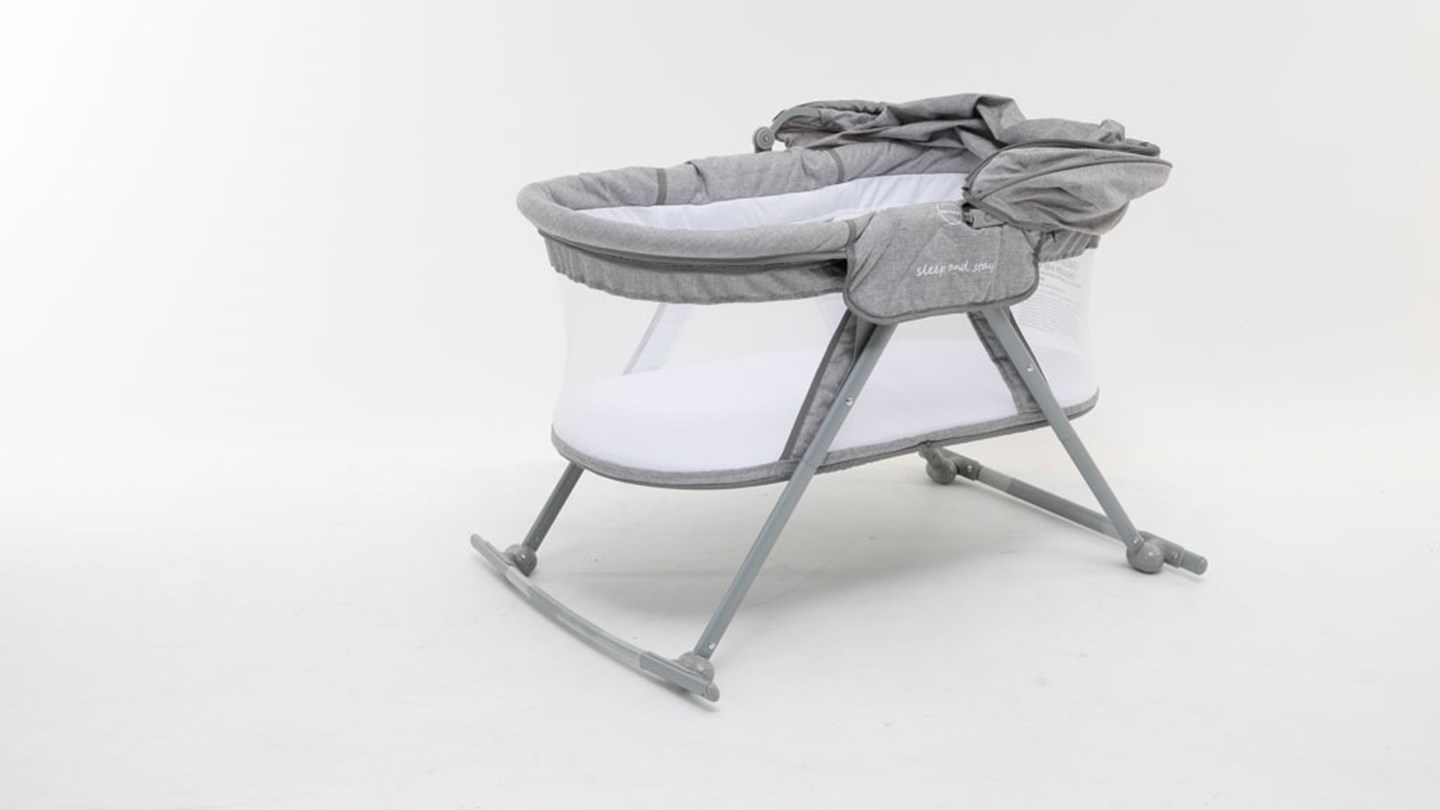
The safest time to move is before the bassinet becomes unsafe. You do not need to wait for a sleep problem.
Try this simple plan:
- Set up the crib first. Use the correct mattress and fitted sheet.
- Place it near your bed if possible. This supports room sharing.
- Use the same sleep routine. Keep the room calm and dim.
- Put your baby down on their back.
- Keep the crib empty. Do not copy an adult bed setup.
- Give your baby time to adjust. A new space may feel large at first.
- Keep using the crib for naps and night sleep. Consistency can help.
If your baby cries after the move, comfort them in ways that keep the sleep space safe. You can hold, feed, or soothe your baby, then return them to the crib before you sleep.
Do not place the bassinet inside the crib. Do not use a sleep positioner to stop a baby from rolling. These changes can create entrapment or suffocation risks.

Common bassinet safety mistakes
The most common mistakes involve adding items or delaying the move after a baby becomes mobile.


Adding soft items
Pillows, blankets, stuffed animals, bumpers, and padded inserts can cover a baby’s face or limit airflow. Keep the bassinet bare except for the fitted sheet.
If your baby needs warmth, use clothing or a properly fitted wearable blanket that is not weighted and does not cover the head. Choose the right size so it cannot ride up over the face.
Using an inclined surface
A bassinet should have a flat, level sleep surface unless the product is specifically regulated and labeled for another use. Incline can allow a baby’s head to fall forward and affect breathing.
Do not raise one end with a towel, book, wedge, or extra mattress.
Using a recalled or damaged product
Check the product name and model number. Look for recalls before use and after buying secondhand. Avoid a product with missing parts, broken locks, torn mesh, or an unknown history.
Relying on age alone
A four-month-old baby who rolls has different needs from a four-month-old baby who does not. Development changes the answer.
Moving too late
A bassinet may seem convenient, but a mobile baby can push against the sides or become trapped. If you are unsure whether a movement counts, contact the manufacturer or your child’s health care professional before continued use.

What if my baby rolls in the bassinet?
If your baby rolls or shows signs of rolling, stop swaddling and review the bassinet’s instructions. Move the baby to a crib, portable crib, or play yard as soon as possible if the bassinet is not approved for that stage.
Keep placing the baby on their back at the start of sleep. If the baby rolls independently after being placed on the back, you generally do not need to keep turning the baby back, provided the sleep space is clear and safe.
Do not use straps, wedges, rolled towels, or positioners to hold the baby in place. These products can raise the risk of injury or breathing problems.
Seek urgent help if a baby has trouble breathing, turns blue or gray, becomes limp, or cannot be awakened. For nonurgent questions about a sleep setup, call the child’s pediatrician.

Key takeaways
- Most babies use a bassinet for about 3 to 5 months, but there is no universal age.
- Follow the product’s weight, size, and developmental limits.
- Stop using the bassinet when your baby rolls, pushes up, sits, pulls up, or reaches a stated limit.
- Use a firm, flat, level surface with only a fitted sheet.
- Keep the baby’s sleep space in the parents’ room, but not in the adult bed.
- Move to a compliant crib, portable crib, or play yard before the bassinet becomes unsafe.
Frequently asked questions
Can a baby sleep in a bassinet after 6 months?
Sometimes, but only if the baby still meets every product limit and has not reached a developmental stop point. Many babies are rolling or pushing up by six months, so a crib is often more suitable by then. Check the manual instead of using age alone.
Is a bassinet safer than a crib for a newborn?
A compliant bassinet and a compliant crib can both provide a safe sleep space. A bassinet is smaller and may make room sharing easier. A crib usually lasts longer. The safety benefit comes from the firm, flat, empty sleep surface and correct use.


Can a baby sleep in a bassinet during the day?
Yes, if the bassinet is approved for sleep and the baby is within its limits. Use the same safe setup for naps as for nighttime sleep. Do not use a couch, adult bed, swing, or car seat as a routine nap space.
Can a baby sleep in a bassinet if their feet touch the end?
Feet touching the end does not automatically mean the bassinet is too small. Check the maker’s length and weight limits. Move the baby if the body is cramped, the head can reach the side, or the baby can push into an unsafe position.
What is the safest next step if I cannot find the bassinet manual?
Find the model number on the product and search the manufacturer’s U.S. website. If you cannot verify the limits, do not use the product for unsupervised sleep until the manufacturer confirms its instructions. A pediatrician can help with general sleep questions, but the manufacturer must confirm product-specific limits.
Final answer
A baby usually stays in a bassinet for the first few months, often until about 3 to 5 months. But the correct stopping point is earlier if the baby rolls, pushes up, sits, reaches the weight or size limit, or can move into an unsafe position.
Check the manual today, prepare a safe crib or portable crib in the same room, and move your baby before the bassinet is outgrown.
