
Introduction
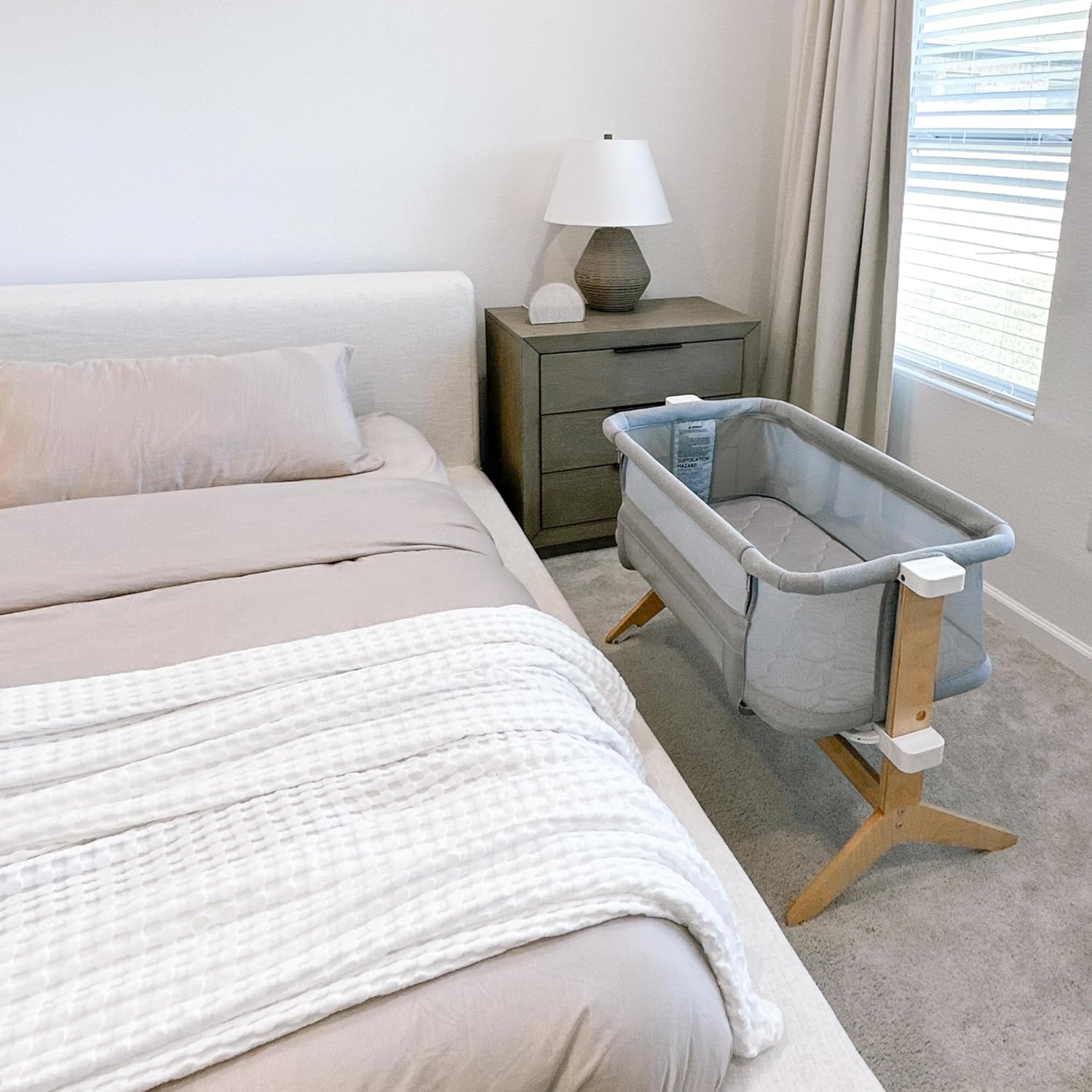
In the United States, the safest place for a newborn to sleep is a separate, firm, flat sleep surface in the parents’ room, such as a bassinet, crib, or portable play yard. Keep the bassinet close enough to reach from your bed without standing, but do not place it on the adult bed or in a position that creates a gap, tilt, or entrapment risk.
There is no single federal rule that says a bassinet must be exactly 12, 18, or 24 inches from a bed. The right distance depends on the bassinet type, its instructions, bed height, stability, and how easily you can see and reach the baby. Always follow the product manual first.
The American Academy of Pediatrics recommends room sharing without bed sharing, ideally for at least the first six months. This setup makes night feeds and checks easier while keeping the baby on a separate sleep surface.

The safest distance between a bassinet and your bed
Place the bassinet beside your bed, within easy reach, with no part of it touching or resting on the bed. In many rooms, this means positioning it about one arm’s length away, though the exact space can vary.


Use these practical checks:
- You can see the baby from your normal sleeping position.
- You can reach the baby without leaning across a large gap.
- The bassinet stands fully on the floor or its approved base.
- The adult bed does not push against the bassinet.
- Bedding, pillows, blankets, and cords cannot fall into the bassinet.
- The bassinet cannot slide, tip, or become wedged between the bed and a wall.
- The setup matches the manufacturer’s instructions.
The key issue is not the number of inches. The key issue is safe access without shared surfaces or trapped spaces.
A bassinet that is a few inches farther away may be safer than one placed directly against the bed if the closer position causes rubbing, tipping, blocked locking parts, or a dangerous gap.
Why room-sharing distance matters
Keeping the bassinet near your bed supports safe room sharing. It lets you respond to feeding cues, crying, and other needs without placing the baby on an adult mattress.
According to the American Academy of Pediatrics safe sleep guidance, infants should sleep on a separate, firm, flat surface with no loose bedding or soft objects. The AAP also recommends room sharing without bed sharing because it can lower the risk of sleep-related infant death compared with having the baby sleep in a separate room.
The National Institutes of Health Safe to Sleep program gives similar advice. Room sharing means the baby sleeps in the same room as the parent, but not in the same bed.
A close bassinet can make nighttime care easier, but closeness does not make bed sharing safe. Do not move the baby onto your mattress for routine sleep, even if the bassinet is next to the bed.

How to place a bassinet beside your bed
Follow these steps before the baby uses the bassinet.
1. Read the bassinet manual
Check the instructions for:
- Minimum and maximum mattress height
- Approved mattress and sheet size
- Bedside attachment rules
- Required locking mechanisms
- Minimum clearance from walls or furniture
- Weight and age limits
- Whether the product is approved for overnight sleep
- Whether the bassinet can be moved while occupied
A product marketed as a “bedside sleeper,” “co-sleeper,” or “baby bed” may not have the same intended use. Some products are made for supervised lounging only, not unsupervised sleep.


2. Choose a stable location
Place the bassinet on a level floor. Keep it away from:
- Windows and window-blind cords
- Lamps and electrical cords
- Heaters, radiators, and vents
- Shelves or wall decorations
- Pets that could reach inside
- Other children who may climb or place objects inside
- Heavy furniture that could fall or shift
Do not place the bassinet on a chair, sofa, adult bed, countertop, or other raised surface unless the product is specifically designed and approved for that use.
3. Check the gap beside the bed
If the bassinet sits next to the bed, inspect the space from several angles. There should not be a gap where the baby’s head, neck, arm, or leg could become trapped.
Do not use pillows, rolled towels, blankets, foam, or furniture to fill a gap. These items can shift and create a suffocation hazard.
If the bassinet touches the bed, move it away unless the manual specifically allows a secure bedside attachment. A free-standing bassinet should remain stable on its own and should not rely on the bed for support.
4. Test access from your sleeping position
Lie in bed and ask:
- Can I see the baby clearly?
- Can I reach the baby without stretching across the mattress?
- Will my blanket or pillow fall into the bassinet?
- Could I accidentally pull the bassinet toward the bed?
- Can I get out of bed without bumping it?
If access is difficult, move the bassinet closer only if doing so remains consistent with the manual and does not create contact or entrapment risks.
5. Use only a safe sleep setup
Place the baby:
- On their back for every sleep
- On a firm, flat mattress
- In a bassinet with a properly fitted sheet
- Without pillows, blankets, bumpers, toys, positioners, or sleep wedges
The U.S. Consumer Product Safety Commission advises using products according to their instructions and keeping soft items out of an infant’s sleep area.

Bassinet distance examples
The table below shows how to think about common setups. These are practical examples, not universal measurements.
| Bassinet setup | Usually appropriate? | Why |
|---|---|---|
| Free-standing bassinet beside the bed, stable and within reach | Yes | Supports room sharing and easy access |
| Bassinet touching the adult bed | Not usually | It may shift, rub, or create an unsafe gap |
| Bassinet wedged between the bed and wall | No, unless specifically designed for it | Entrapment and stability risks may occur |
| Bassinet on top of the adult mattress | No | The baby may roll or fall, and the surface is not a separate approved sleep area |
| Bedside sleeper securely attached as directed | Yes, if used exactly as instructed | The product is designed for that configuration |
| Bassinet several feet from the bed but still in the same room | May be acceptable | Room sharing can still occur, but access is less convenient |
| Bassinet in another room | Not the preferred setup for young infants | It does not provide the same room-sharing benefit |
The best placement combines safe separation, stable support, and easy access. Do not sacrifice stability just to place the bassinet closer.
How far should a bedside sleeper be from the bed?
A bedside sleeper that attaches to the adult bed should follow the manufacturer’s exact attachment instructions. Unlike a regular free-standing bassinet, it may be designed to sit directly beside the mattress or connect to the bed frame.


Before using one, confirm that:
- The attachment straps or brackets are installed correctly.
- The adult mattress height falls within the allowed range.
- The sleeper is tightly secured to the bed.
- No gap exists between the sleeper and the mattress.
- The adult bedding cannot cover the baby’s sleep area.
- The sleeper remains level.
- The side panel is used only as the manual describes.
- The bed frame can safely support the attachment system.
Do not assume that a product is safe for bedside use because its name includes “co-sleeper.” Look for clear instructions for overnight infant sleep and bedside attachment.
If the sleeper moves when you press or pull it gently, stop using the bedside configuration until you correct the installation. Contact the manufacturer if the manual does not explain the problem.

What to do if the bassinet does not fit beside your bed
A small bedroom can make safe placement difficult. Do not force the bassinet into a narrow space.
Try these options:
- Move a nightstand or chair. Remove nearby furniture rather than pushing the bassinet against the bed.
- Turn the bassinet’s long side parallel to the bed. This may provide more room without blocking access.
- Move the bed slightly. Even a small change can create a stable location.
- Use a different approved sleep surface. A crib or portable play yard may fit better.
- Place the bassinet farther away in the same room. A clear, stable setup is better than a tight or unstable one.
- Ask the manufacturer for guidance. Provide the exact model and describe the room layout.
Do not remove wheels, locks, side panels, or stabilizing parts to make the product fit. Do not use an improvised extension, spacer, wedge, or attachment.
Signs the bassinet is too close or too far away
The bassinet is too close when:
- It presses against the bed.
- Adult bedding can reach the baby.
- The bed can move or tip it.
- The bassinet is trapped against a wall.
- You cannot inspect the full side of the product.
- Its locking or folding parts cannot work correctly.
The bassinet may be too far away when:
- You must stand and walk across the room for every check.
- You cannot see the baby from bed.
- You are likely to bring the baby into bed because access is difficult.
- A monitor is being used as a replacement for safe room sharing.
- The bassinet sits in a high-traffic area where it may be bumped.
Distance alone does not determine safety. A bassinet farther from the bed can still be safe if it is in the same room, stable, clear of hazards, and used according to its instructions.
Common mistakes to avoid
Treating “close” as “in the adult bed”
A bassinet should be near the bed, not on it. Adult mattresses, pillows, comforters, and mattress gaps are not designed for infant sleep.
Using a baby nest or lounger as a bassinet
Many infant loungers and nests are not intended for unsupervised or overnight sleep. Check the product’s instructions and safety labeling. If it is not approved for sleep, use a compliant crib, bassinet, or portable play yard instead.
Adding padding or positioners
Extra padding can change the firmness and shape of the sleep surface. Positioners, wedges, bumper pads, and rolled blankets can block breathing or trap the baby.
Ignoring recalled products
Check the bassinet model against the CPSC recalls database before use. This is especially important for used products, hand-me-downs, and items bought through online marketplaces.


Moving the bassinet while the baby is inside
Some bassinets have wheels, but that does not mean they may be moved while occupied. Follow the manual. Lock wheels before placing the baby inside.
Using an inclined sleeper
Infant sleep products with a raised or inclined surface can allow the baby’s head to fall forward. Use a level sleep surface unless the product is specifically designed and approved for safe infant sleep under current requirements.

Safety checklist for nightly use
Before putting your baby down, confirm:
- The bassinet is in the same room as the parent.
- It is on a firm, flat, level surface.
- The bassinet is stable and all locks are engaged.
- The product is not resting on the adult bed.
- No unsafe gap exists beside the bed.
- The mattress fits tightly in the bassinet.
- Only a fitted sheet is on the mattress.
- The baby is placed on their back.
- The bassinet is free of pillows, blankets, toys, bumpers, and positioners.
- Cords, blinds, heaters, pets, and other hazards are out of reach.
- The product is within its age, weight, and use limits.
- The bassinet has not been recalled or altered.
If you find a problem, move the baby to another approved sleep surface while you correct the setup.
What official guidance says
The main safety recommendations come from U.S. health and consumer safety agencies:
- The American Academy of Pediatrics recommends back sleeping, a firm and flat surface, a separate sleep space, and room sharing without bed sharing.
- The NIH Safe to Sleep program recommends keeping soft objects and loose bedding out of the infant’s sleep area.
- The CPSC provides information on safe sleep products, recalls, and infant sleep hazards.
- The federal eCFR crib and bassinet regulations establish requirements for certain bassinets and cradles.
These sources do not set one universal distance in inches between every bassinet and every adult bed. Product design and manufacturer instructions still matter, especially for bedside sleepers.

Key takeaways
- Keep the bassinet beside your bed and within easy reach, but not on or supported by the adult bed.
- There is no universal required distance, such as 12 or 24 inches, for every bassinet.
- Do not allow the bassinet to touch the bed unless the product is specifically designed and securely attached for bedside use.
- Prevent gaps, tipping, sliding, loose bedding, and blocked access.
- Use a firm, flat mattress with only a fitted sheet.
- Keep the baby in the same room, but on a separate sleep surface.
- Follow the exact product manual and check for recalls.
FAQs
Can a bassinet be right next to the bed?
Yes, if it is a free-standing bassinet that remains stable, does not touch the adult bed, and has no unsafe gap. If it is a bedside sleeper, attach it only as the manufacturer directs.
Can I put the bassinet on my side of the bed?
Yes. Many parents place the bassinet on the side they use most for nighttime care. Leave enough room to get in and out of bed safely, and keep the bassinet away from cords, heaters, curtains, and other hazards.
Should the bassinet touch the wall?
A wall may help define the room layout, but do not wedge the bassinet tightly between the wall and bed unless the product is specifically designed for that position. Follow the manual’s clearance rules.
Is a bassinet safer than a crib next to the bed?
Not automatically. A compliant bassinet and a compliant crib can both provide a safe sleep surface when used correctly. A bassinet may be easier to reach, while a crib may last longer as the baby grows. The product’s condition, design, setup, and use matter most.
How long should the baby sleep in a bassinet?
Use the bassinet only within its stated age, weight, developmental, and mobility limits. Stop when the baby reaches the manufacturer’s limit or can roll, push up, sit, or otherwise outgrow the product, depending on the instructions. Move the baby to an appropriate crib or play yard at that point.


What if I cannot fit a bassinet beside my bed?
Place an approved bassinet, crib, or portable play yard in the same room in the safest stable location available. Do not place it on the bed, sofa, or another raised surface. If needed, rearrange furniture or ask the manufacturer about the safest approved setup.
Conclusion
The safest answer to “how far should a bassinet be from the bed?” is: close enough to reach and see the baby easily, but fully separate, stable, and free of unsafe gaps. Do not focus on a precise number of inches unless the product manual provides one.
Set up the bassinet on a firm, flat surface beside the adult bed. Keep bedding and cords away, use the bassinet only within its limits, and place the baby on their back for every sleep. If the setup feels cramped, unstable, or hard to access, change the room layout or use another approved sleep surface rather than improvising.
